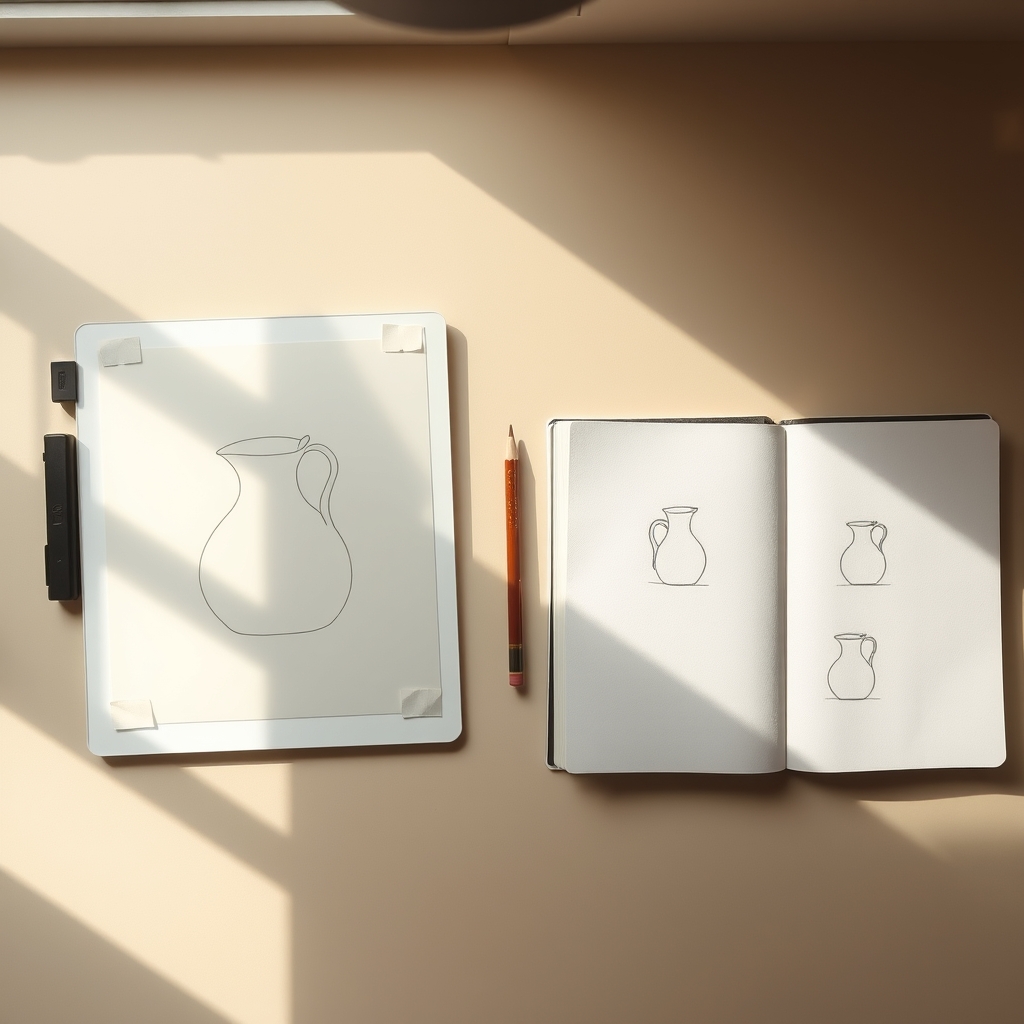
Tracing your own photo or a public domain image for practice is not cheating. Tracing another artist's work and presenting it as your own original piece is, and the problem there is the claim you attached, not the tracing paper. As a learning method, tracing removes the measuring and judgment that observational drawing is built on, so it works best as a checking tool placed either side of freehand attempts at the same subject.
Key takeaways
- Honesty and learning are separate questions here, and only the first one is about ethics.
- Tracing another artist's work and claiming it as original is what people actually object to.
- A traced copy of a protected photo is usually still a derivative work, so selling it carries risk.
- Tracing removes the measuring step, which is the part of observational drawing that is genuinely hard.
- It does build line confidence and shows you the true shape your eye keeps getting wrong.
- Animation, comics, concept art and storyboards all use tracing as standard practice.
- Pair every trace with freehand attempts at the same subject, since the learning sits in the gap between them.
Ask this in any art forum and you get two answers, both delivered with total confidence. One says tracing is how you learn and anyone who says otherwise is gatekeeping. The other says tracing is for people who will never be real artists.
Both answers are useless because they collapse two separate questions into one. There is a question about honesty, which is about whose work you traced and what you then claimed about it. And there is a question about learning, which is about what the act of tracing does and does not teach your eye. They have different answers.
The Honesty Question Is the Simple One
Tracing your own photograph, a photo you have permission to use, or a public domain image, and then saying so if anyone asks, is nobody’s business but yours. Nothing has been taken from anyone.
Tracing another artist’s drawing or painting and presenting the result as your own original work is the thing people actually object to, and calling it cheating is fair. The issue there has nothing to do with the tracing paper. It is the claim you attached afterwards.
Copyright sits on top of all this and varies by country, so treat the following as the general shape of it and check your own local rules before selling anything. Photographs are owned by whoever took them, including photos you found through an image search. A traced copy of a protected image is usually still a derivative of it, and posting it publicly or selling it can put you on the wrong side of the law even when you never claimed to have invented the composition. Our copyright page sets out how we handle this on our own work.
Practising privately in a sketchbook that nobody sees is a different situation from publishing, and almost nobody has a problem with the first one.
The Learning Question Is the Interesting One
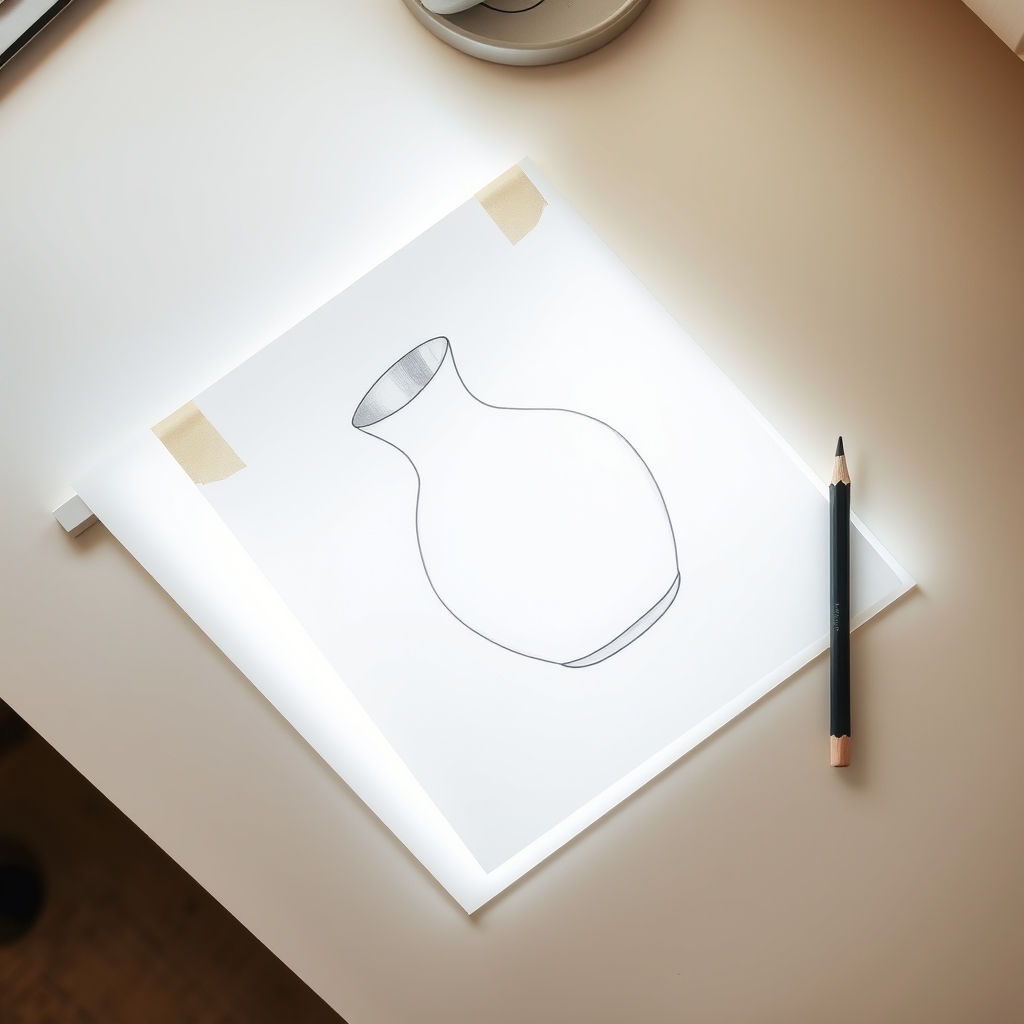
Set the ethics aside and ask what your brain is doing while your hand follows a line on a light pad. That is where the real answer sits, and it is more specific than either side of the argument usually admits.
Drawing from observation is mostly a measuring problem. You look at a shape, you judge an angle against a vertical, you compare one width against another, you decide a distance, and you commit. Tracing removes every one of those decisions. The measuring has already been done by the image underneath, so the part of the task that is genuinely difficult never happens.
That is the honest case against it as a learning method. Someone who traces two hundred faces has not spent any time practising the skill that makes the two hundred and first face work without tracing paper.
What Tracing Does Teach
It is not worthless, and the people who dismiss it entirely are overstating their case. Tracing genuinely helps with a few things.
- Line confidence. Following a shape at speed teaches your arm to make long committed strokes, which is a motor skill and does transfer.
- Seeing the real shape. Almost everyone is surprised by how wide a jaw actually is, or how short a forearm looks at an angle. Tracing shows you the true shape in a way that arguing with your own drawing does not.
- Understanding a style. Tracing a page of a comic artist you admire shows you exactly how much they simplify and where they place their weight.
- Getting started when you are stuck. A traced layout under a fresh sheet can break a blank page paralysis, which is worth something on the days described in what causes art block.
Professionals Trace Constantly
The moral panic around this tends to ignore how commercial art is actually made. Animation studios have always traced and retraced between keyframes. Comic artists rule off panels over printed layouts. Concept artists paint over rough 3D blockouts to nail perspective. Architectural illustrators trace CAD output. Storyboard artists work over photographs of their own shot references.
In each case the tracing is doing a job that is dull and mechanical, and the person doing it already has the observational skill they would need to do it freehand. They are saving time on the part that does not need judgment so they can spend it on the part that does. That is a completely different situation from a beginner using tracing to avoid ever developing the judgment.
How to Trace So It Actually Teaches You Something
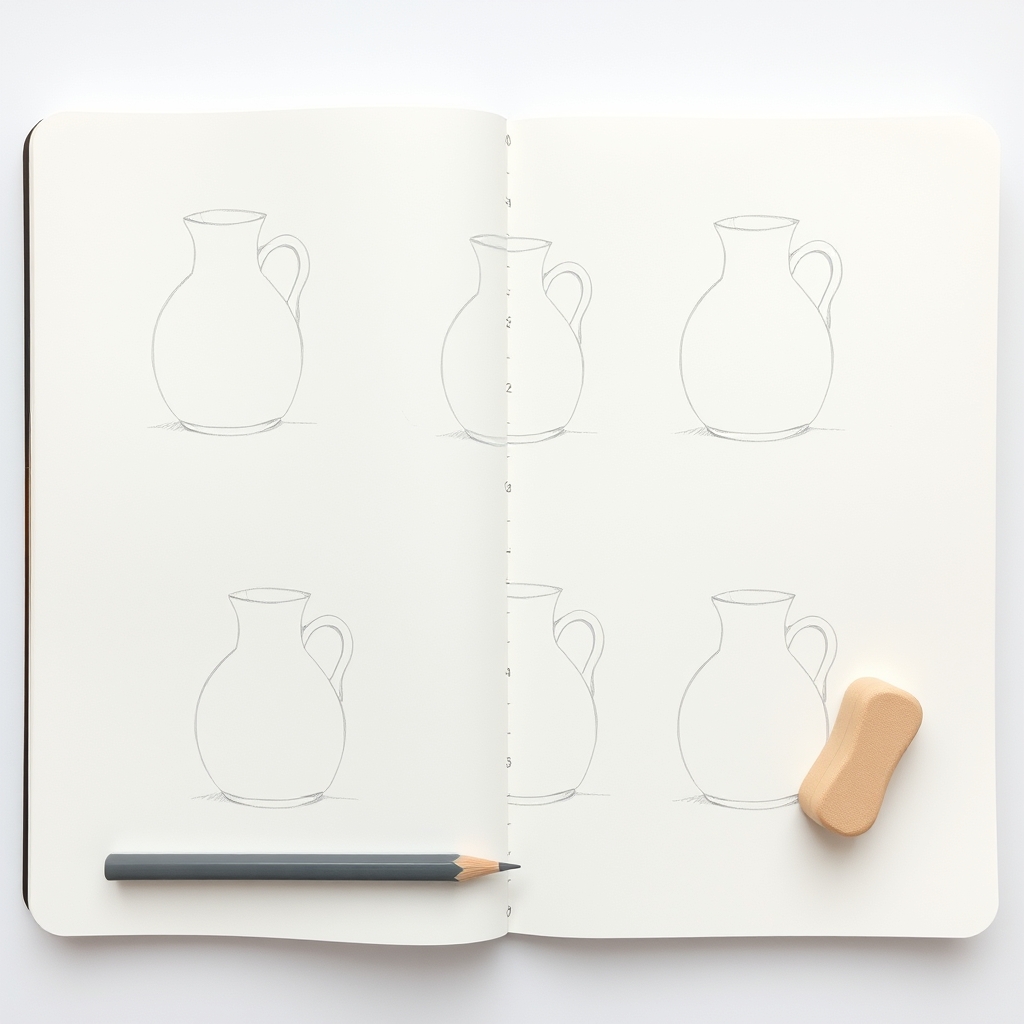
The page above is the thing tracing cannot replace. Six attempts at the same jug, each one freehand, each one carrying the correction from the attempt before it. That repetition is where the measuring skill gets built, and there is no shortcut into it.
So use tracing as a checking tool and put the freehand work either side of it. Four ways to do that:
- Draw it freehand first, then trace the same reference, then lay one over the other. Every place they disagree is a specific error you can name, and you will find the same errors repeating across drawings.
- Trace only the construction. Get the big proportions down by tracing, then close the reference and finish the drawing from your own understanding.
- Trace it once, then redraw it three times freehand from memory. The trace becomes a study aid instead of the finished piece.
- Trace to learn a specific mechanism, such as how a particular artist builds a hand or how a horse’s back legs actually fold, then apply it to a drawing of your own.
The pattern in all four is the same. Tracing is the input, freehand work is the output, and the learning happens in the gap between them.
When It Becomes a Trap
The real risk is comfort. Traced work looks better than your freehand work, sometimes much better, and posting it gets a better response. That gap is uncomfortable to sit with, so people quietly stop posting the freehand attempts, then quietly stop making them.
A year later the traced pieces look good and the freehand ability has gone nowhere. This is the outcome the loud voices in the argument are actually worried about, and they are right to worry about it even when they explain it badly.
One honest test: if you had to draw the same subject with no reference under the page, how close would you get? If the answer makes you wince, the balance has tipped. Why you cannot draw what you see in your head covers what to do about that, and the short version is that the visual library only gets stocked by observation.
Frequently Asked Questions
Is tracing cheating in art?
Tracing your own photo or a public domain image for practice is not cheating. Tracing another artist’s work and presenting it as your own original piece is. As a learning method tracing skips the measuring and judgment that observational drawing is built on, so it works best as a checking tool alongside freehand practice.
Can you sell a traced drawing?
Only if you hold the rights to what you traced, such as your own photograph or a public domain image. A traced version of someone else’s photo or artwork is generally treated as a derivative work, and selling it without permission can be an infringement. Rules vary by country, so check yours before listing anything.
Do professional artists trace?
Yes, routinely. Animation, comics, concept art, storyboards and architectural illustration all involve tracing or painting over references and blockouts. The difference is that those artists already have the freehand skill and are using tracing to save time on mechanical work.
Is using a grid the same as tracing?
A grid sits somewhere in between. You still judge each shape inside its square, so some measuring survives, but the large proportions are handed to you. It is a reasonable bridge for a beginner working on a big or complicated piece, and worth weaning yourself off once the shapes start landing on their own.
Should a complete beginner trace?
A little, for a short time, and always paired with freehand attempts at the same subject. Tracing is useful early for showing you what a shape really looks like when your own eye keeps insisting otherwise. It stops being useful the moment it becomes the way you finish every drawing.
Where to Go Next
If the honest answer to the test above stung, the useful next read is how long it takes to learn to draw, because the timeline is measured in hours of freehand work and knowing that makes the tracing question answer itself.
For structured freehand practice on the subjects people trace most, try the face drawing tutorial and how to draw hands. If your freehand attempts come out technically correct and still look wrong, why do my drawings look bad covers the faults behind that, and the drawing guide sets out a practice order.