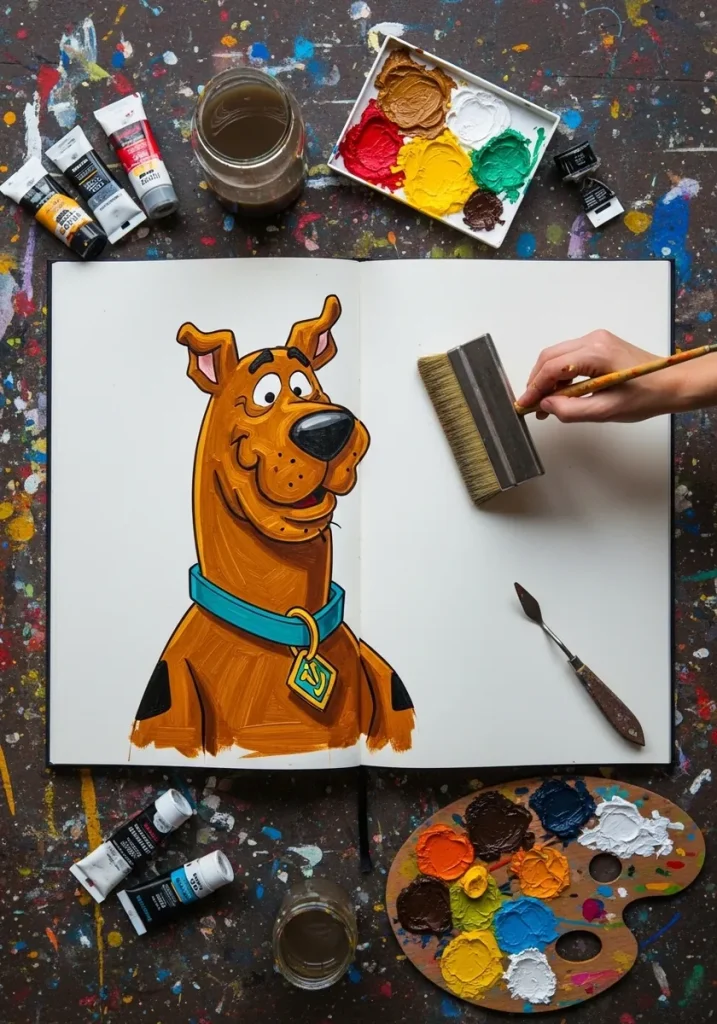
Scooby is a Great Dane drawn deliberately wrong. Designer Iwao Takamoto learned the breed standard from a breeder and then reversed it, giving the character bowed legs, a sloped back and a receding chin.
Key takeaways
- Iwao Takamoto designed the character by inverting Great Dane show standards on purpose.
- Bowed legs, a sloping back and a small receding chin are the deliberate design errors that define him.
- The black markings on his back are irregular diamond shapes, not round spots.
- Keep the muzzle long and rounded with the nose set well forward of the eyes.
- The series first aired in the United States on 13 September 1969.
This character is a Great Dane drawn wrong on purpose, and knowing that changes how you draw him. Designer Iwao Takamoto consulted a Great Dane breeder, learned what judges reward in the breed, then reversed every one of those traits. Bowed legs, a sloping back and a receding chin were all deliberate.
That gives you a checklist. Bow the front legs outward, slope the back down from the shoulders, pull the chin back under a long rounded muzzle, and set the eyes close together high on the skull. Draw an anatomically correct Great Dane and the character disappears.
The markings matter too. Those black patches are irregular diamonds rather than round spots, clustered along the spine and haunch, and the turquoise collar is the only cool color in the whole design. The series first aired in the United States on 13 September 1969.
One honest note: he is a copyrighted and trademarked character, so these are practice pieces rather than anything saleable. The thirty-one approaches below run through graphite realism, sumi-style ink, neon gel pen, art nouveau framing and folk pattern. For related construction work, see 3D cartoon character ideas.
Compiled by the GS Art Zone editorial team. Last updated August 2026. Each idea is paired with the specific step that produces the effect, so you can go from the reference straight to paper.
What You Need Before You Start
- A brush pen or fine liner, since the classic look uses a clean line of even weight
- A warm tan plus a darker brown for the markings, which is most of the palette
- One turquoise for the collar, the only cool color in the whole design
- A kneaded eraser for the graphite pieces, several of which need lifted highlights
- Toned kraft or black paper for the warm-lamp and neon pieces further down
1. Pencil Head Study in a Sketchbook
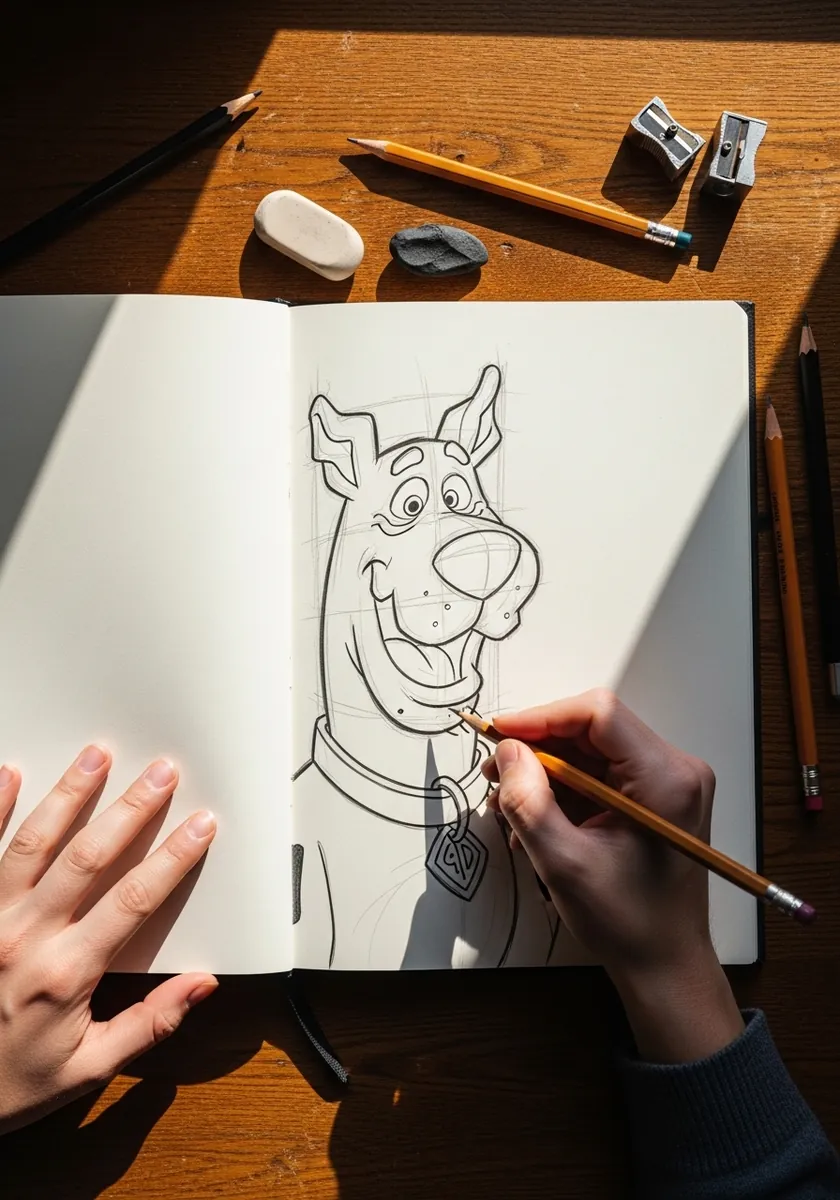
Head studies are where the muzzle length gets fixed. Draw the skull as a small oval and attach the muzzle as a long rounded box projecting well forward, then set the eyes close together above the join. The chin stays tucked underneath.
2. Clean Ink Head With Collar
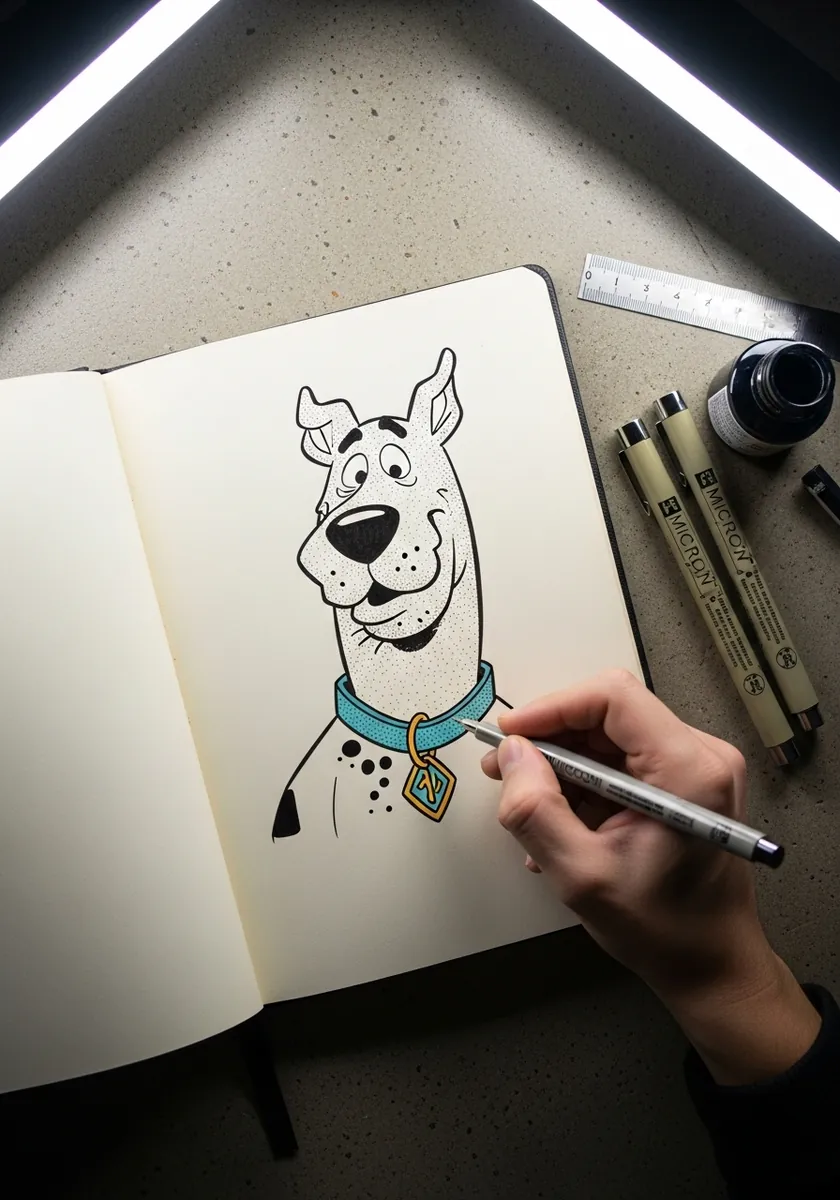
Clean line work has nowhere to hide, so commit to a single even weight throughout. Ink the outline in one pass without going back over any stroke, and let the collar tag be the only place the line thickens. Confidence reads as quality here.
3. Watercolor Head With Splatter
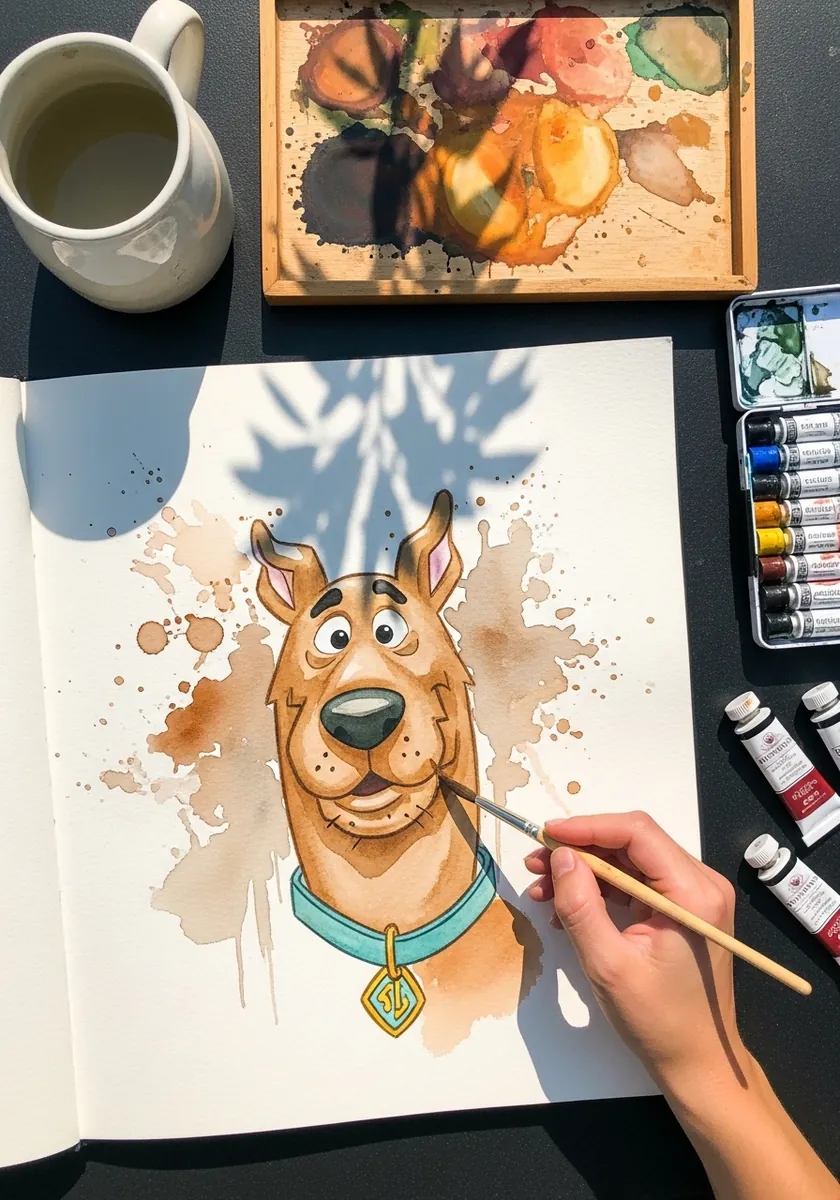
Splatter behind a crisp subject gives you free contrast. Paint the background marks first and let them dry completely, then ink and color the head on top. Doing it the other way round softens exactly the edges you want sharp.
4. Soft Pastel on Peach Paper
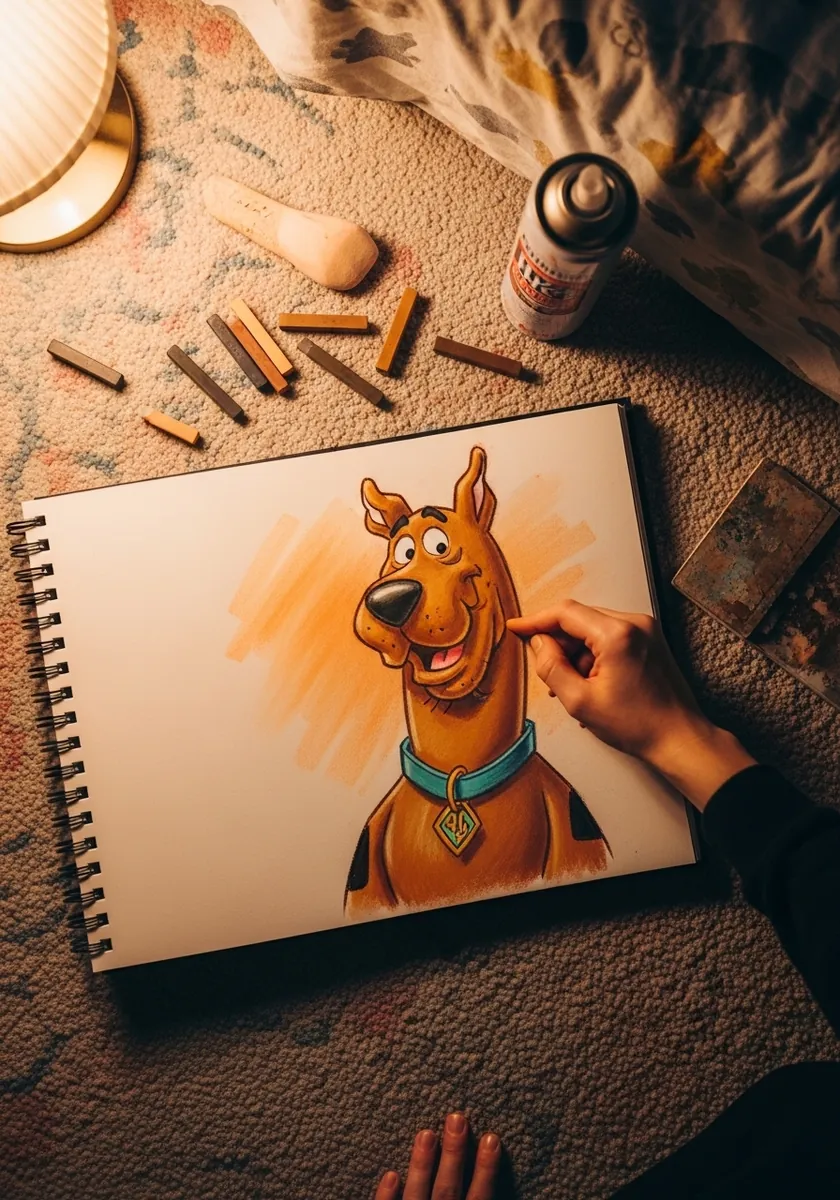
Toned paper supplies the mid value, which halves the work. Add color only where the light falls and one darker brown where it does not, then leave large areas of paper untouched. Filling everything defeats the point of a toned ground.
5. Realistic Graphite Head
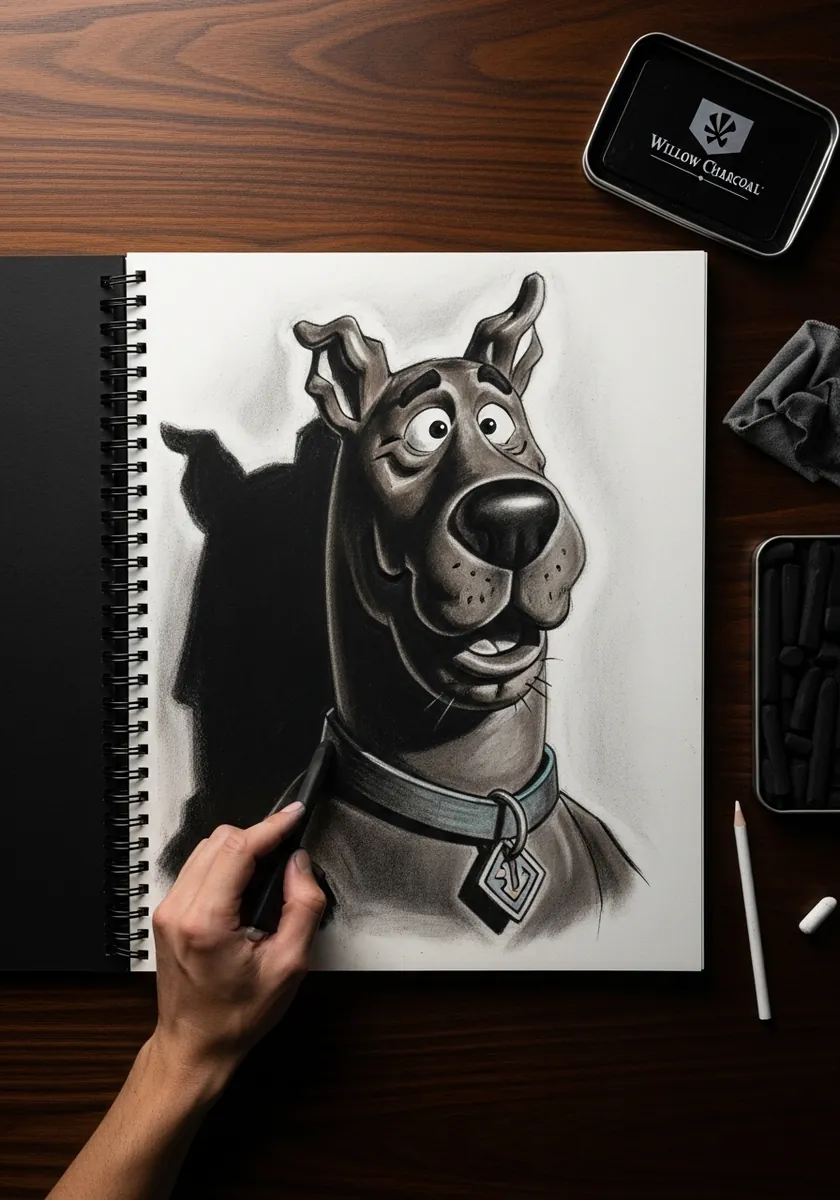
Rendering a flat cartoon design realistically is a genuinely useful exercise. Keep the proportions exactly as drawn, then add fur direction, wet nose texture and eye moisture. The contradiction between cartoon shape and real surface is the whole appeal. Keep the eyes cartoon-flat even here, since realistic eyes turn the whole thing unsettling.
6. Loose Teal Watercolor Run
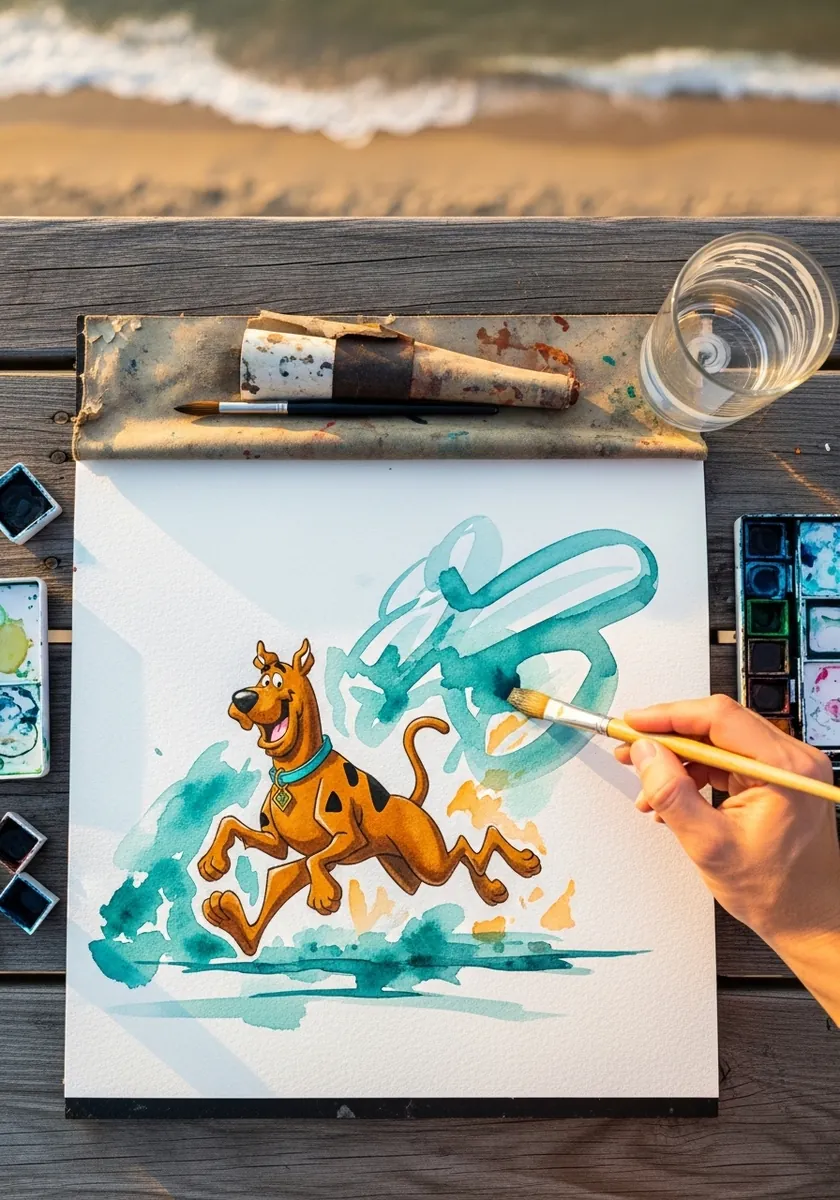
A running pose needs all four legs off the ground at once, gathered under the body. Extend the front pair forward and the back pair behind, arch the spine, and let the ears lift. Loose washes suit motion better than tight rendering.
7. Marker Portrait on Neon Ground
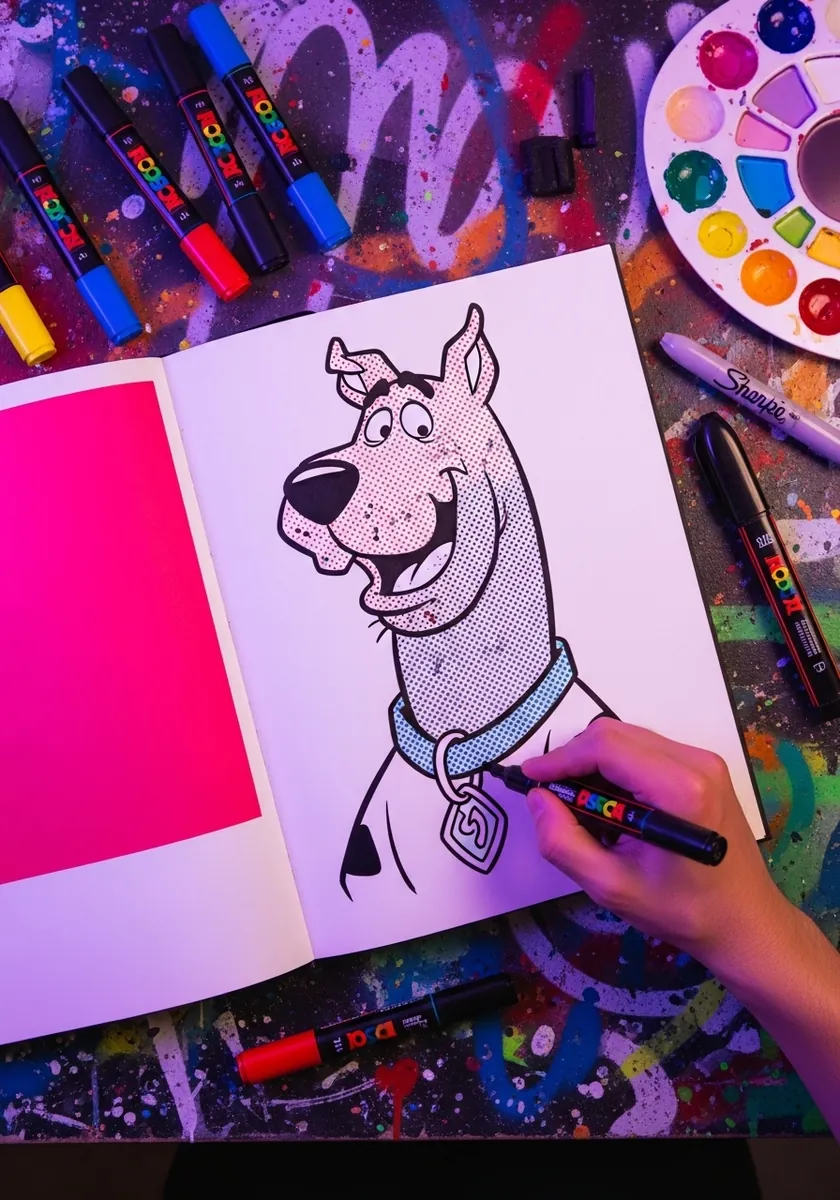
Saturated backgrounds fight a tan character unless you separate them. Ring the figure with a thin black outline, keep the background flat and unmodulated, and let no background hue sit close in value to the fur. Lay the background flat with a broad nib before the figure, so no streaks show through the fur.
8. Quill and Ink Vintage Study
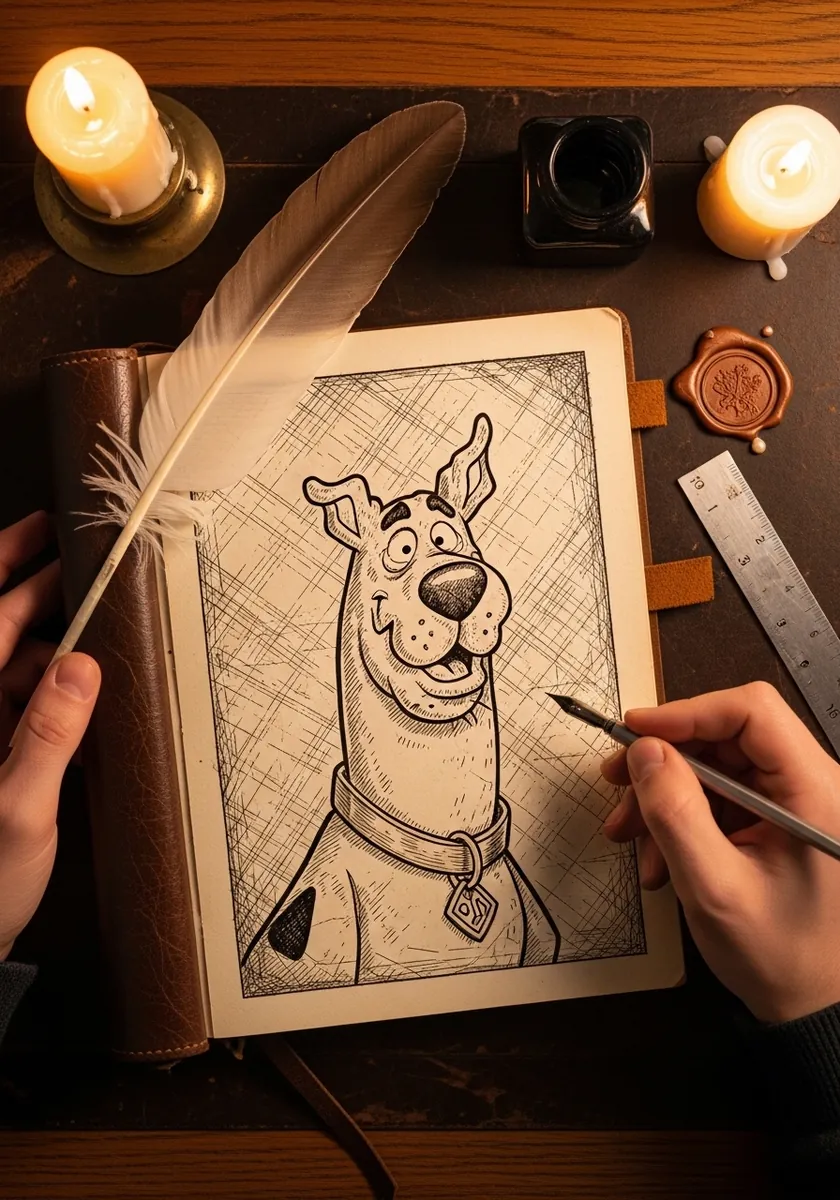
Hatching with a quill means the line varies whether you want it to or not. Use that: run the strokes along the muzzle lengthwise, curve them around the skull, and let the pressure change build the tone naturally. Keep a scrap sheet beside you, since a quill blots without warning on the first stroke after loading.
9. Folk Floral Border Portrait
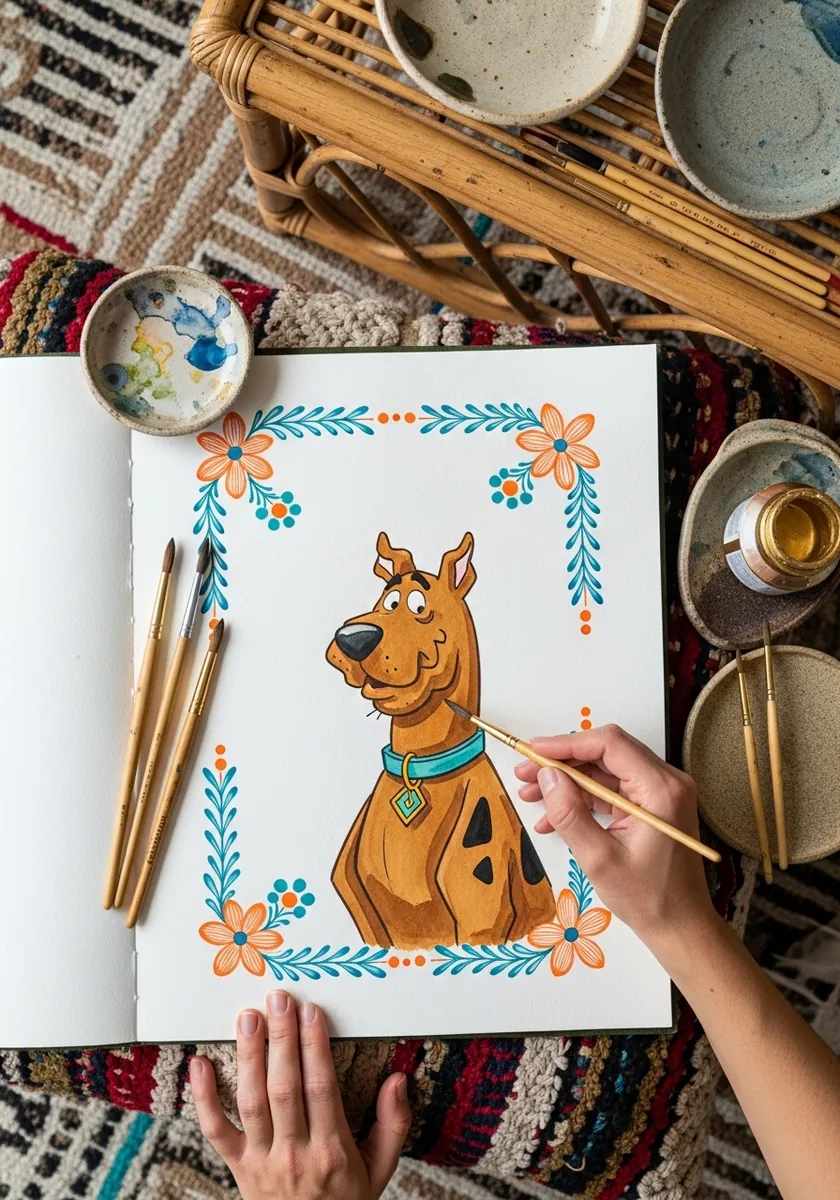
Folk borders repeat one motif exactly rather than improvising. Draw a single flower properly, repeat it around all four sides, and mirror the corners. Keep the character flat and unshaded so it belongs to the same decorative language. Limit the palette to three colors, which is what folk traditions almost always do in practice.
10. Detailed Graphite Head Portrait
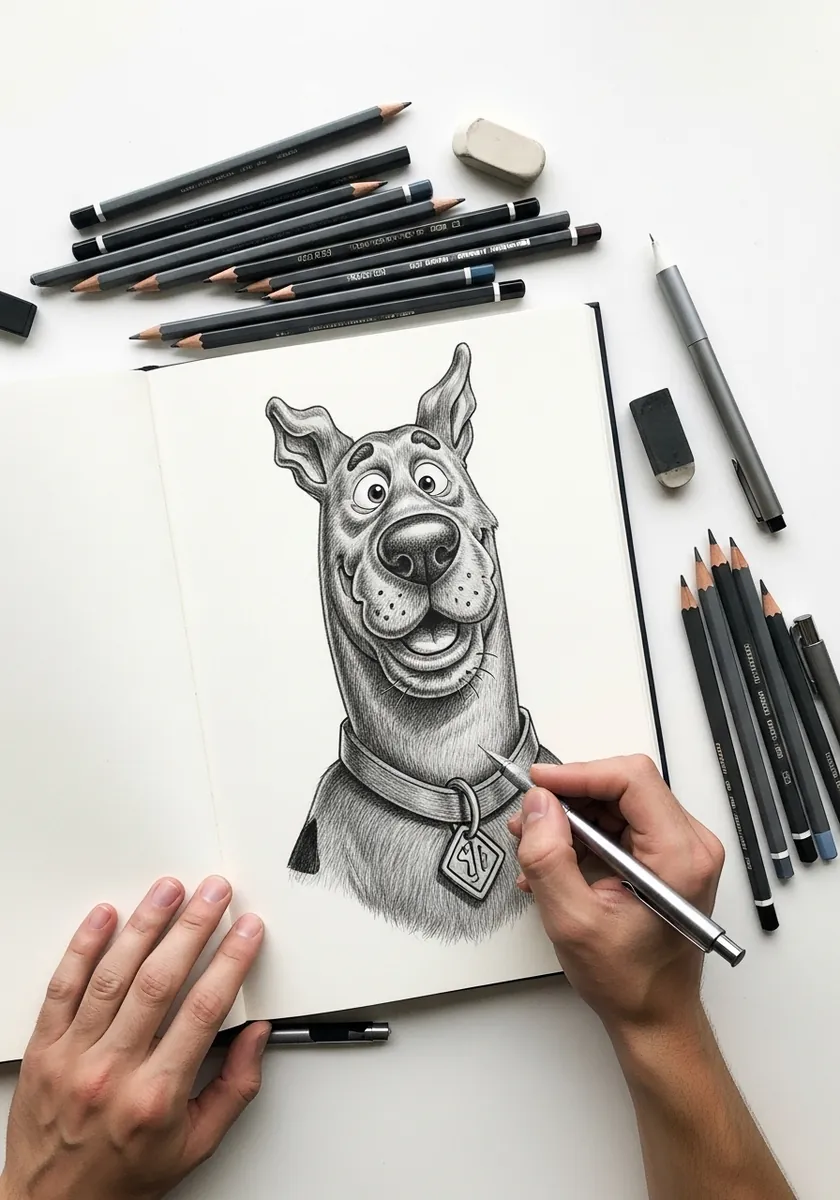
Metal against fur is a texture contrast worth exploiting. Burnish the collar tag to a hard shine with a sharp point, then keep every fur passage soft and directional. Same value, different surface, and both become readable. Leave the nose highlight as untouched paper rather than lifting it, which keeps it genuinely bright.
11. Full Body Standing Pose
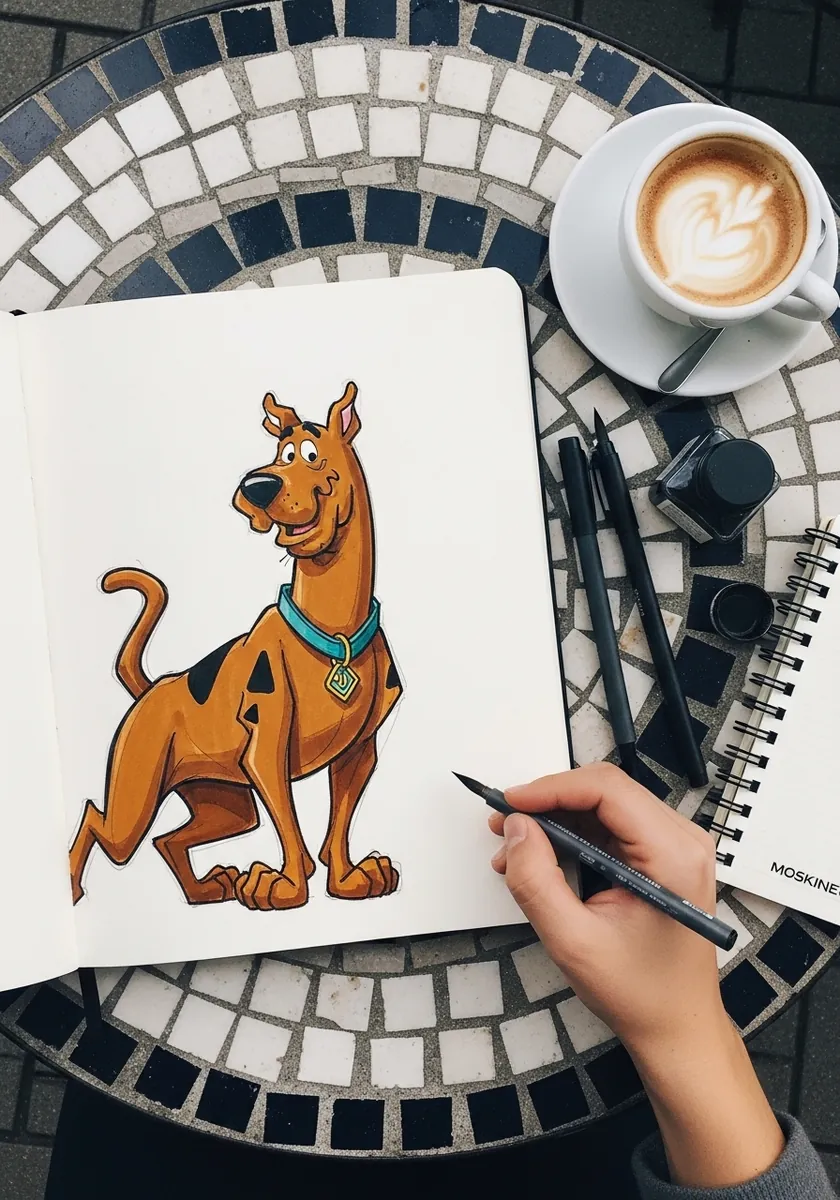
Full figures expose the design faults you are meant to keep. Bow the front legs outward at the elbows, slope the back downward from the shoulders to the hips, and let the chest sit low. Correcting any of that loses the character.
12. Human Styled Character With the Collar
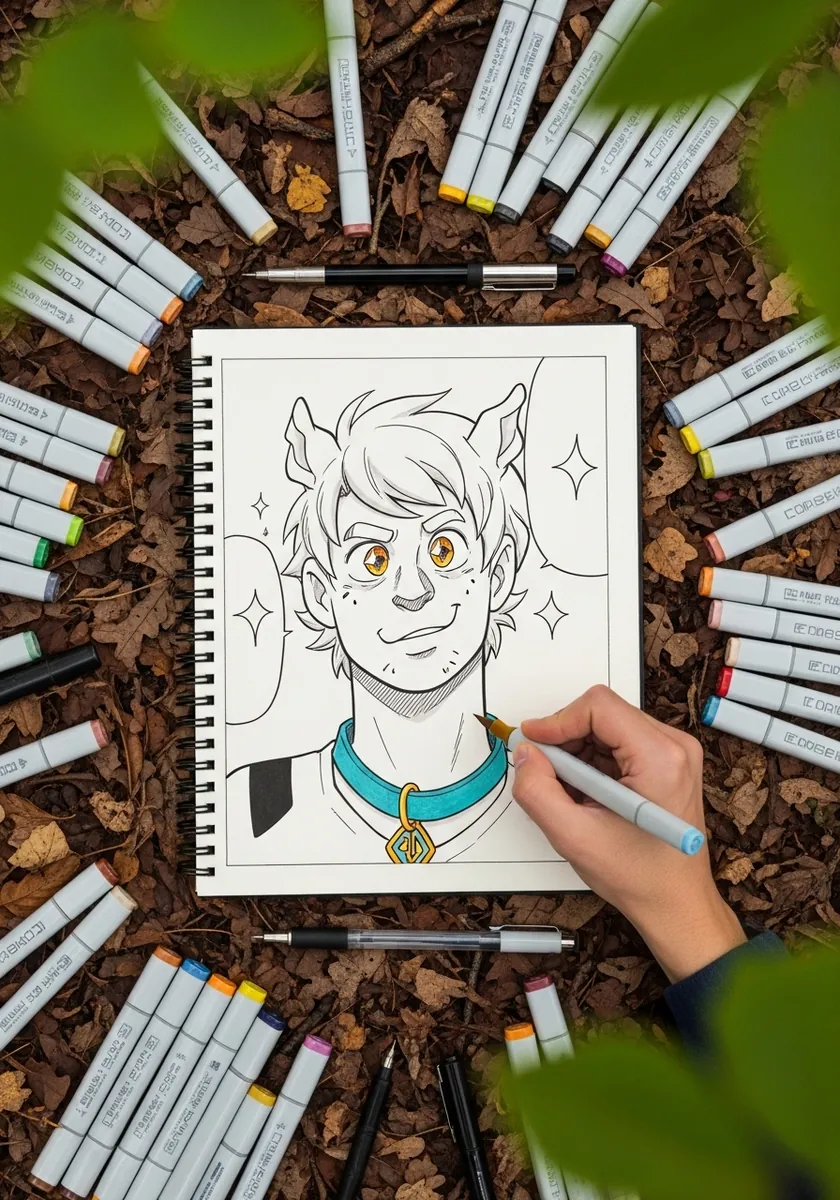
Redesigning an animal character as a human is a real design exercise. Carry across only the identifying features, the collar, the color palette, the posture, and let everything else be freshly invented. Literal translation of the muzzle never works. Keep the palette identical to the original, since color memory carries recognition further than shape.
13. Warm Lamp Study on Kraft
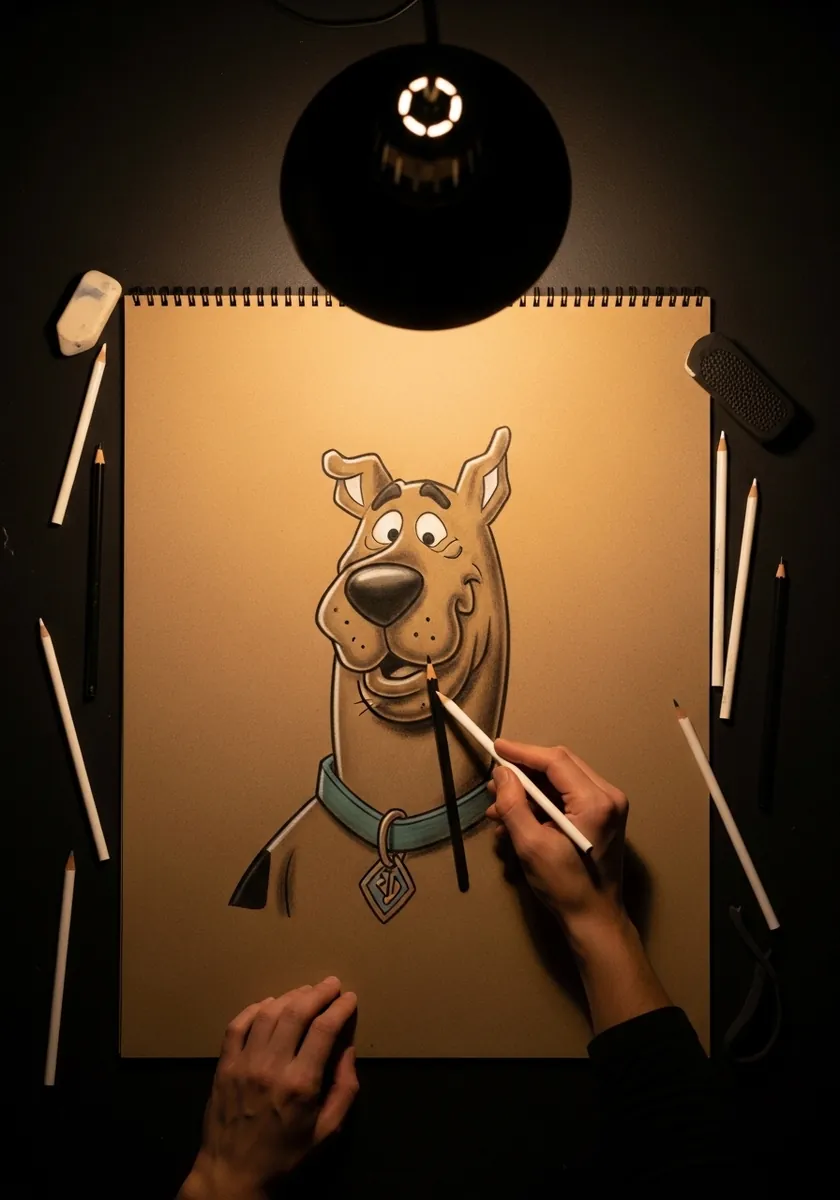
A single warm lamp gives you a hard, controlled setup. Light one side of the muzzle strongly, let the far side fall into the paper tone, and put the brightest note on the wet nose. Nothing outside the pool needs describing.
14. Floral Wreath Portrait
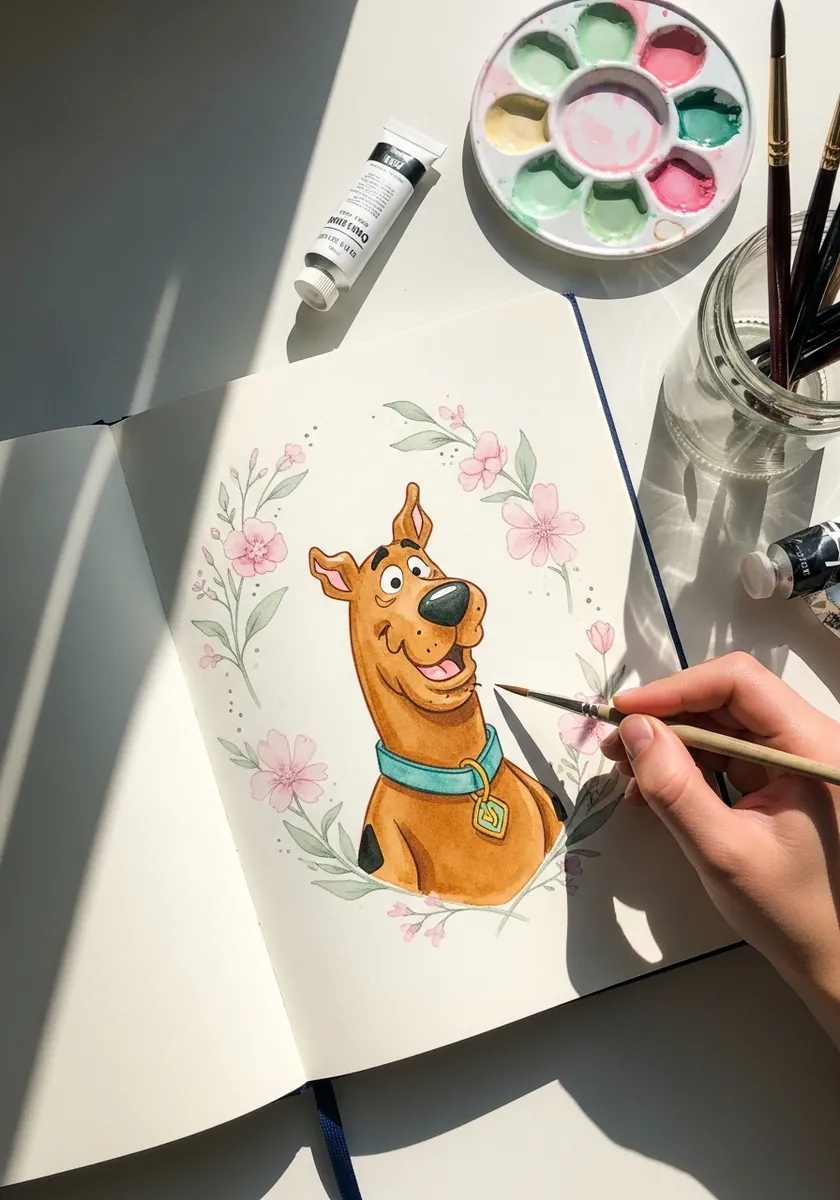
A wreath needs uneven distribution to avoid looking like clip art. Cluster the blooms at two opposite arcs, thin the rest to single leaves, and leave a clear gap of paper between the flowers and the character. Paint the wreath first and the character second, so nothing overlaps where you did not intend it.
15. Bright Acrylic Full Figure
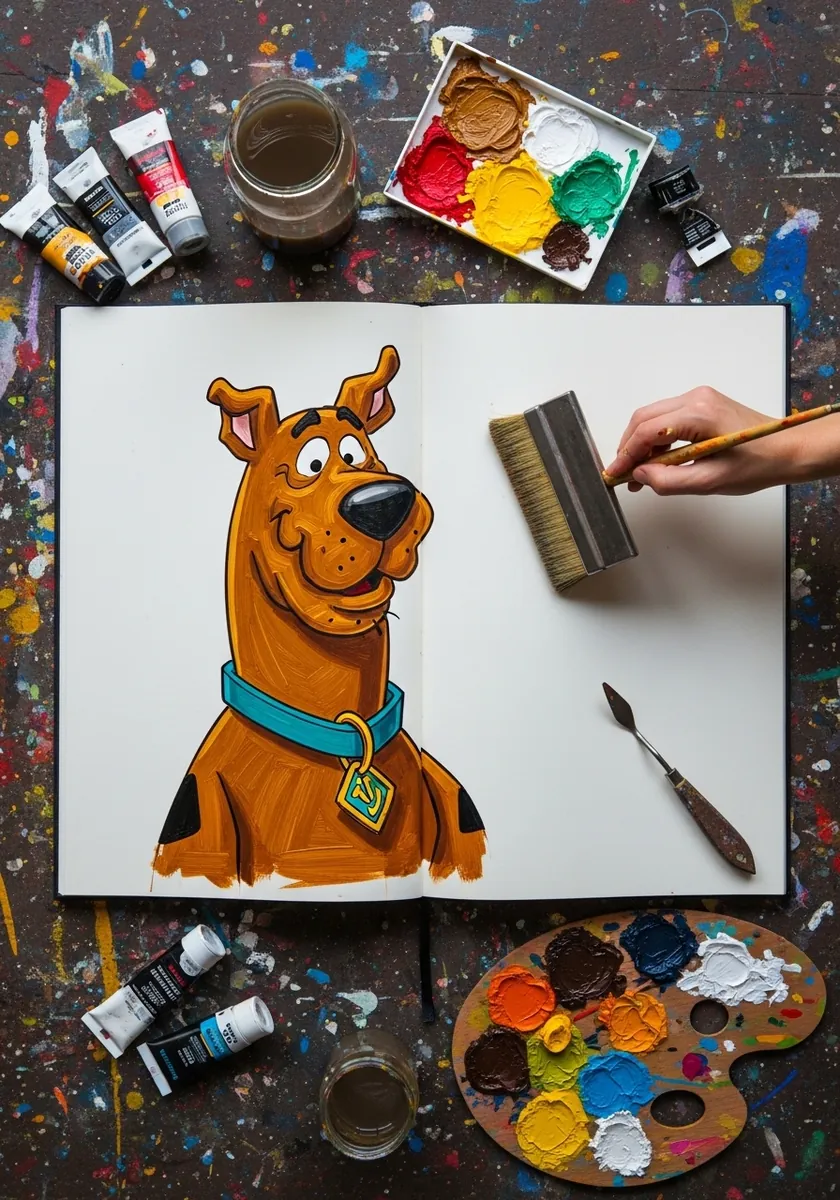
Acrylic dries fast, which suits flat cartoon fills. Mix more of each color than you think you need, block every area in one pass, and outline last when everything beneath is dry. Reworking a dried edge always shows. Keep a spray bottle handy, because acrylic skins over on the palette faster than most people expect.
16. Seated Marker Figure
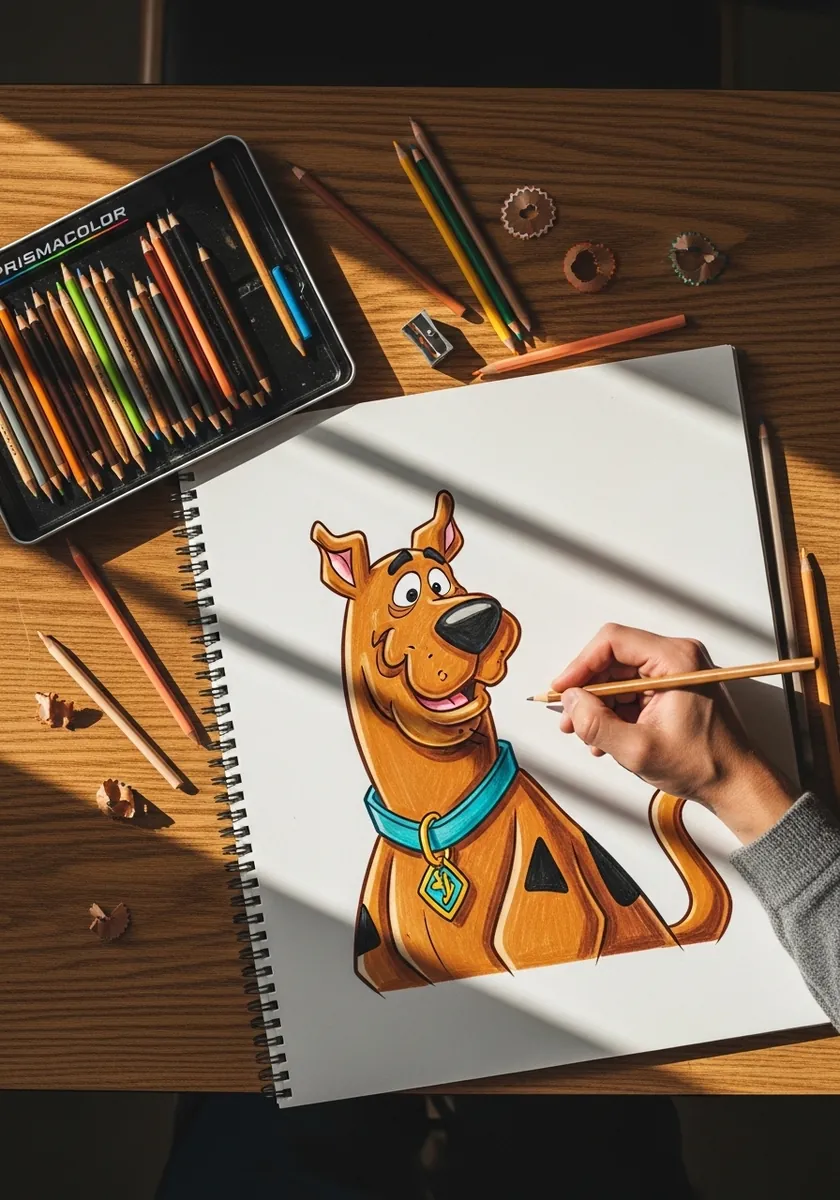
A seated pose puts weight on the haunches, which should spread where they meet the ground. Flatten that contact area slightly, curl the tail around one side, and let the front legs sit slightly splayed rather than parallel. Keep the collar level even though the head tilts, since a tilted collar reads as a mistake.
17. Graphite Head With a Small Study
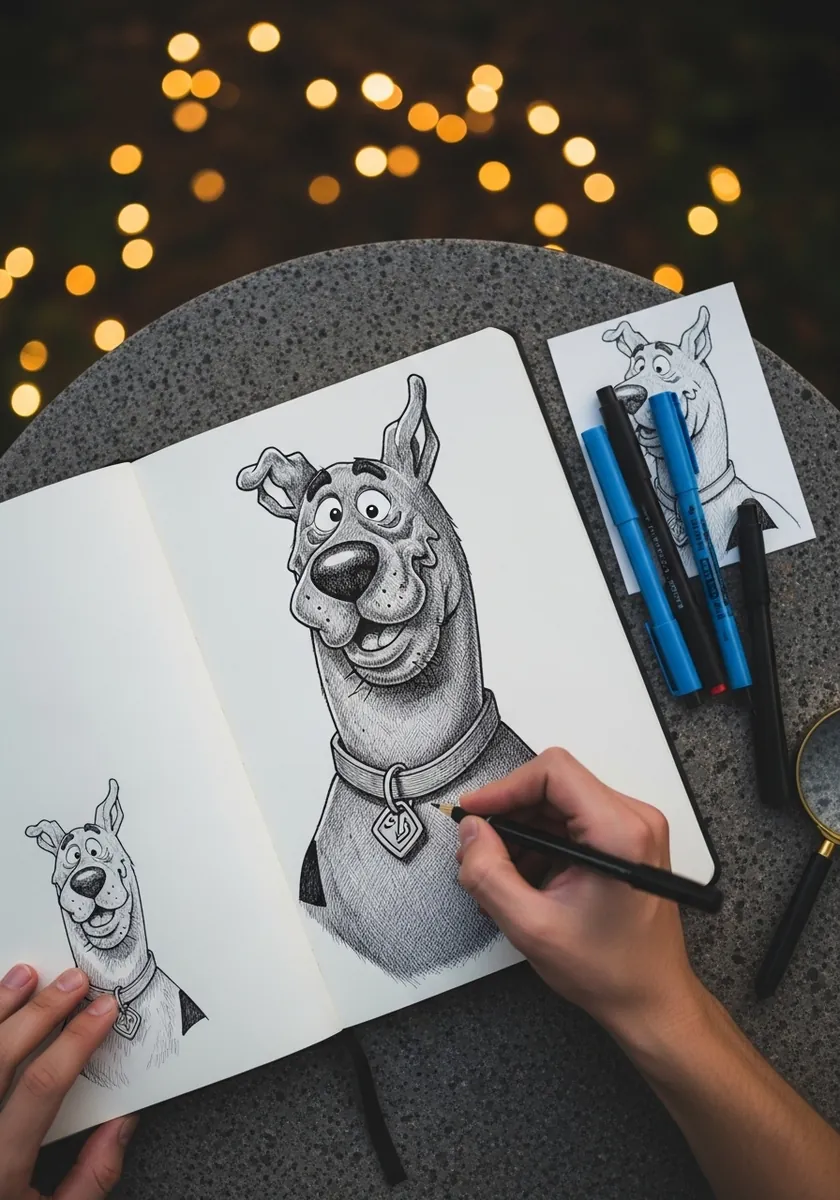
Keeping the small study visible beside the finished piece is a good habit. It shows what changed, gives the page a working feel, and lets you compare proportions directly. Draw the thumbnail first and never erase it. Date both, which turns a single page into a record of how your proportions are improving.
18. Watercolor Splash Seated Pose
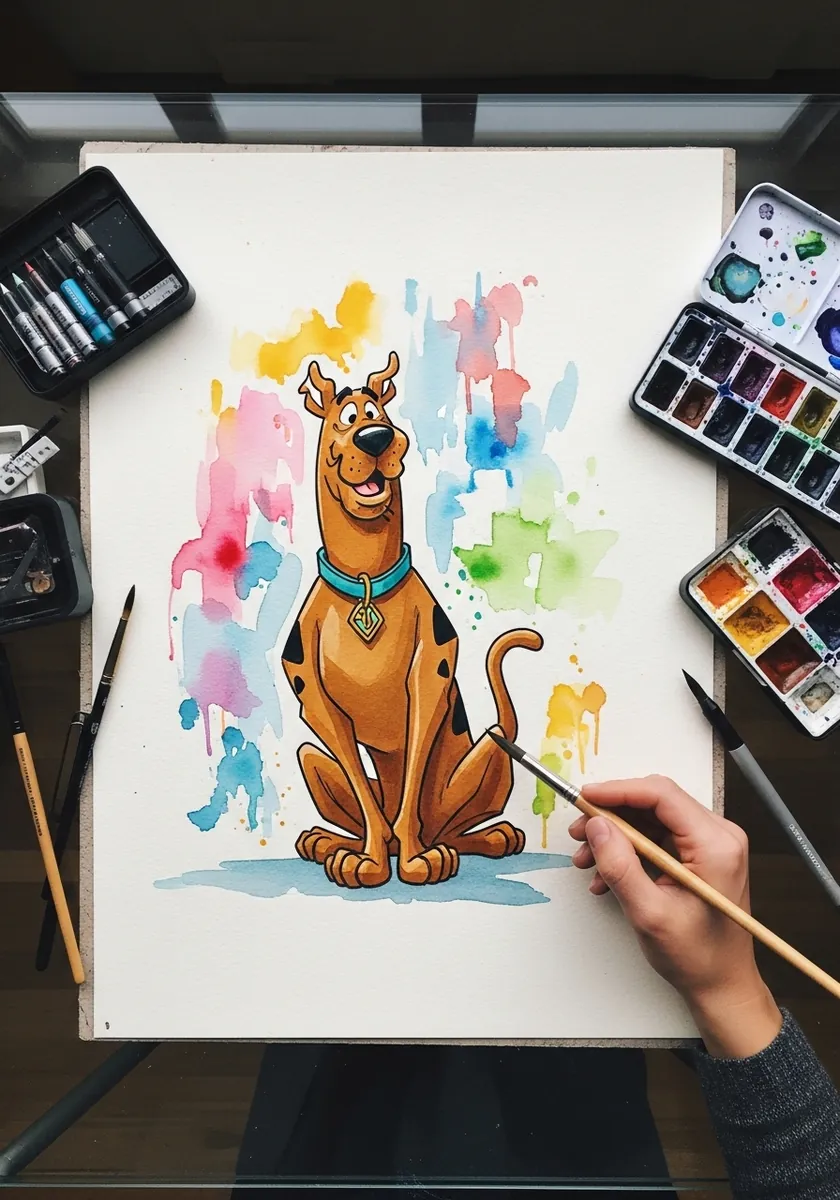
Multicolored splashes need one organizing principle. Keep them all in the lighter half of the value range, let them cluster behind the figure rather than around it evenly, and never let two saturated colors meet while wet. Keep the splashes off the face entirely, so the expression survives all that surrounding activity.
19. Oil Pastel on Blue Ground
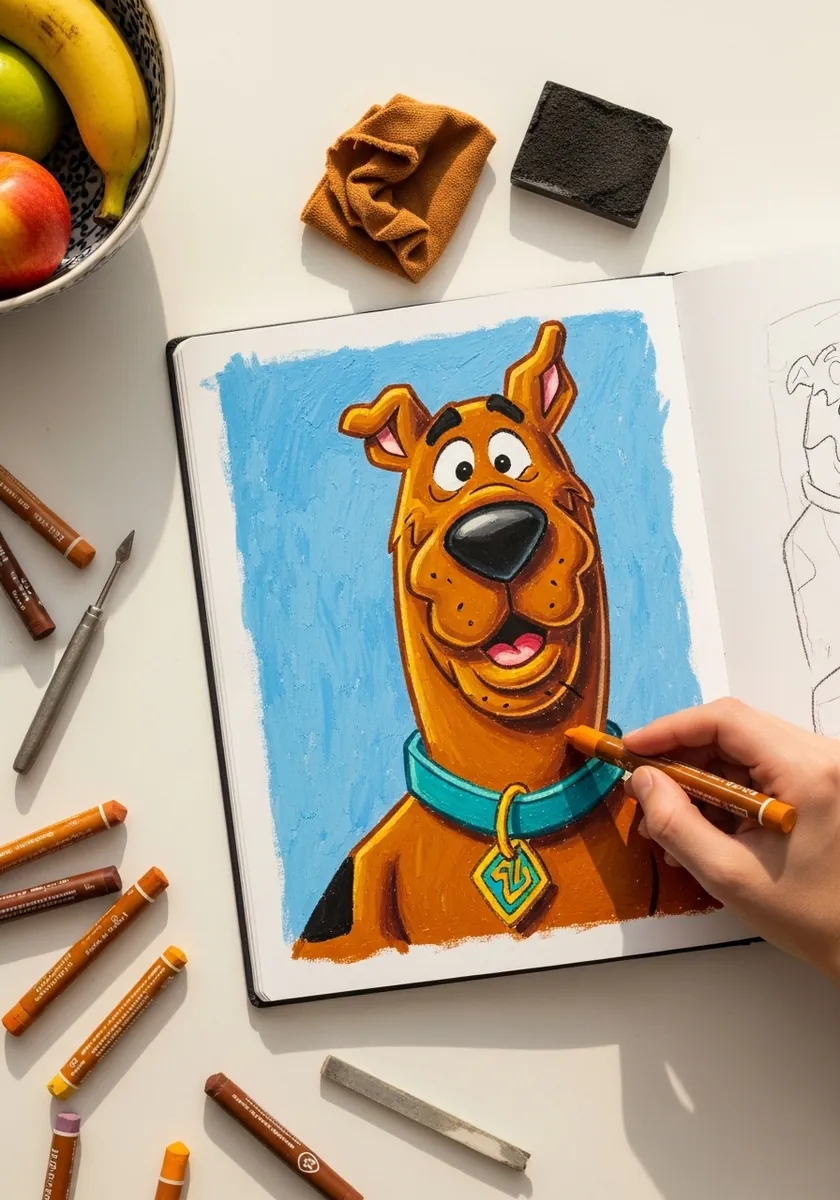
Oil pastel sits on top rather than mixing, so lay the background first and work the figure over it. Press hard for saturation, keep the strokes directional along the body, and scrape back with a blade for the highlights. Warm the tan slightly where it meets the blue, which stops the two colors vibrating at the edge.
20. Neon Gel Pen on Black
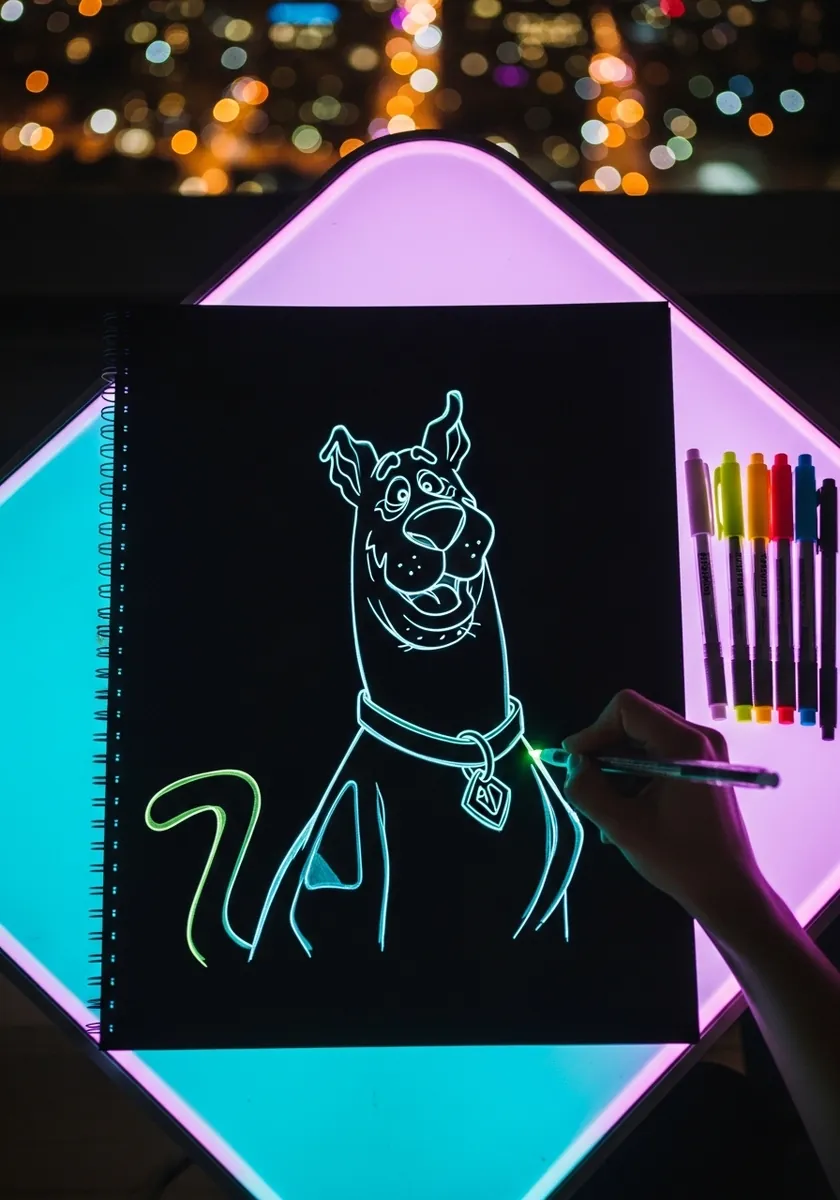
Gel pen on black is line only, so the drawing has to survive without any fill. Vary the line weight by pressing harder on the underside contours, and let the black carry every shadow area completely untouched. Let the ink dry fully before the next stroke crosses it, or gel pen smears across a whole page.
21. Minimal Pencil Line Figure
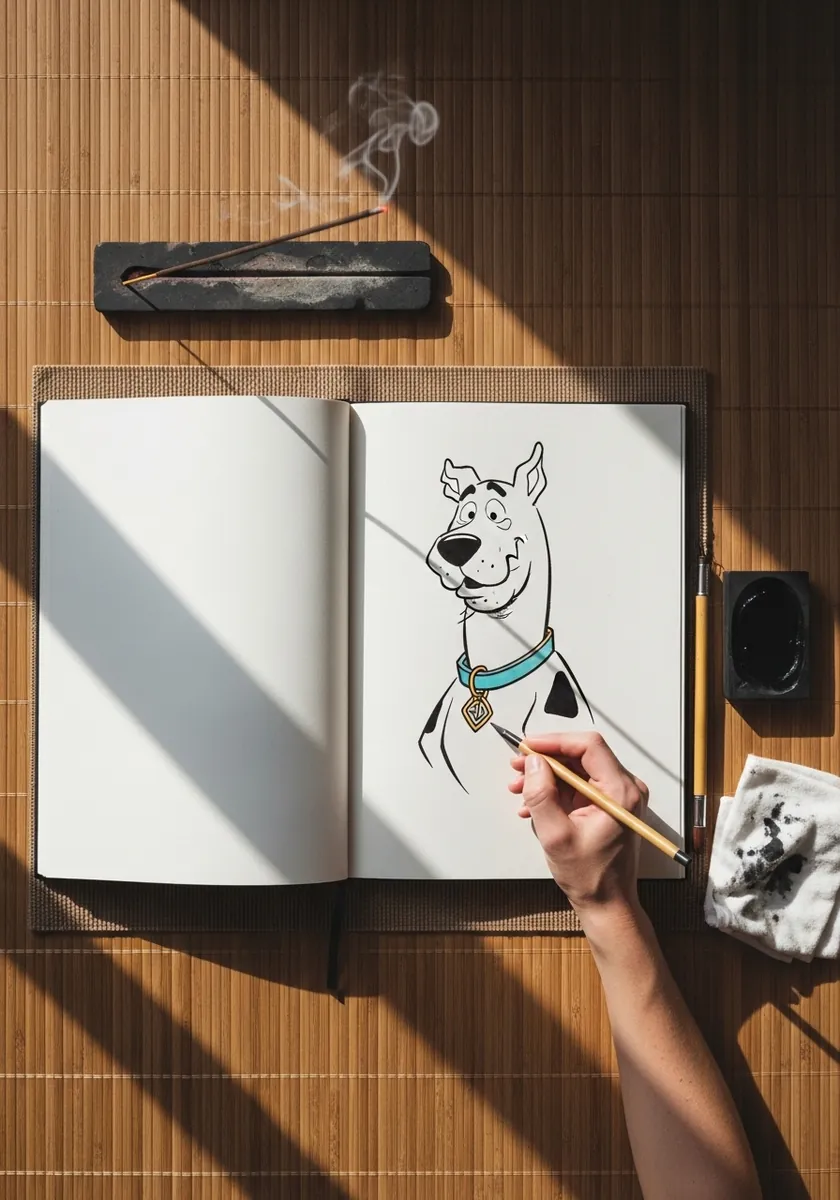
This is the version worth repeating most. Nothing but contour, drawn once, with the bowed legs and sloping back correct. If the silhouette works with no interior detail at all, everything else you add will land. Draw it three times on one page at different sizes, which tests whether the proportions hold up.
22. Colored Pencil With a Blue Wash
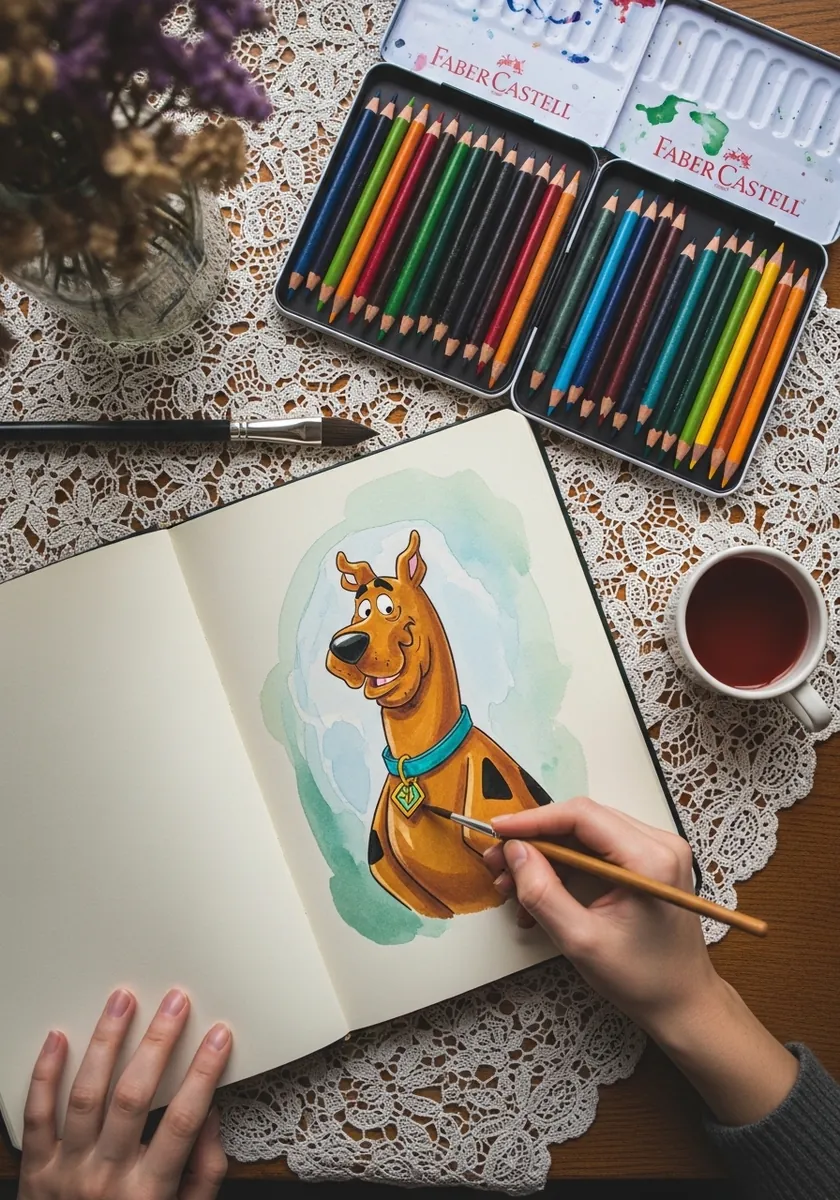
Mixing wet and dry media needs the right order. Lay the watercolor wash first and let it dry completely, then build the colored pencil on top. Pencil applied first resists the wash and leaves patchy gaps. Keep the wash well outside the figure too, so no pencil is ever fighting damp paper.
23. Ink Figure in a Dark Landscape
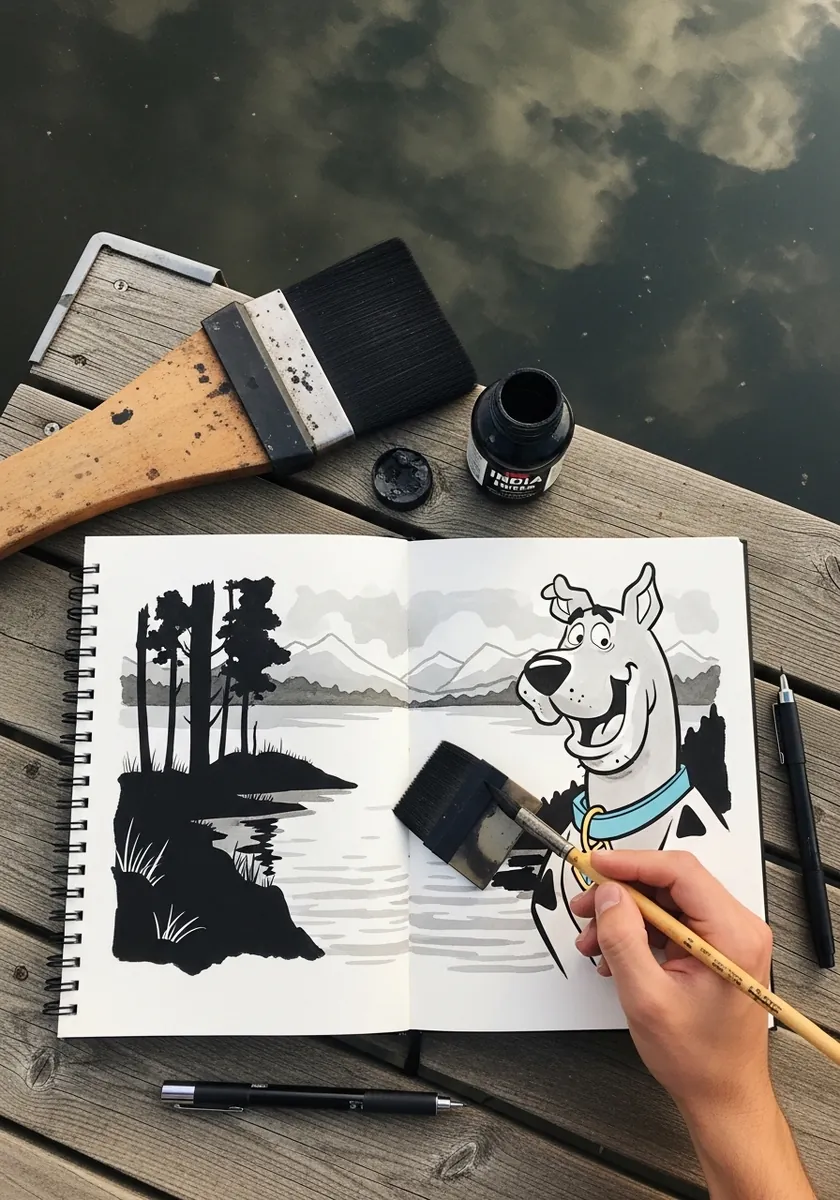
Dropping a comic character into a serious setting works through value contrast. Keep the landscape heavy and dark, the character light and clean, and let the outline separate them. The tonal mismatch is the joke. Leave a halo of untouched paper around the character, which separates him from all that heavy foliage.
24. Flat Graphic Color Blocks
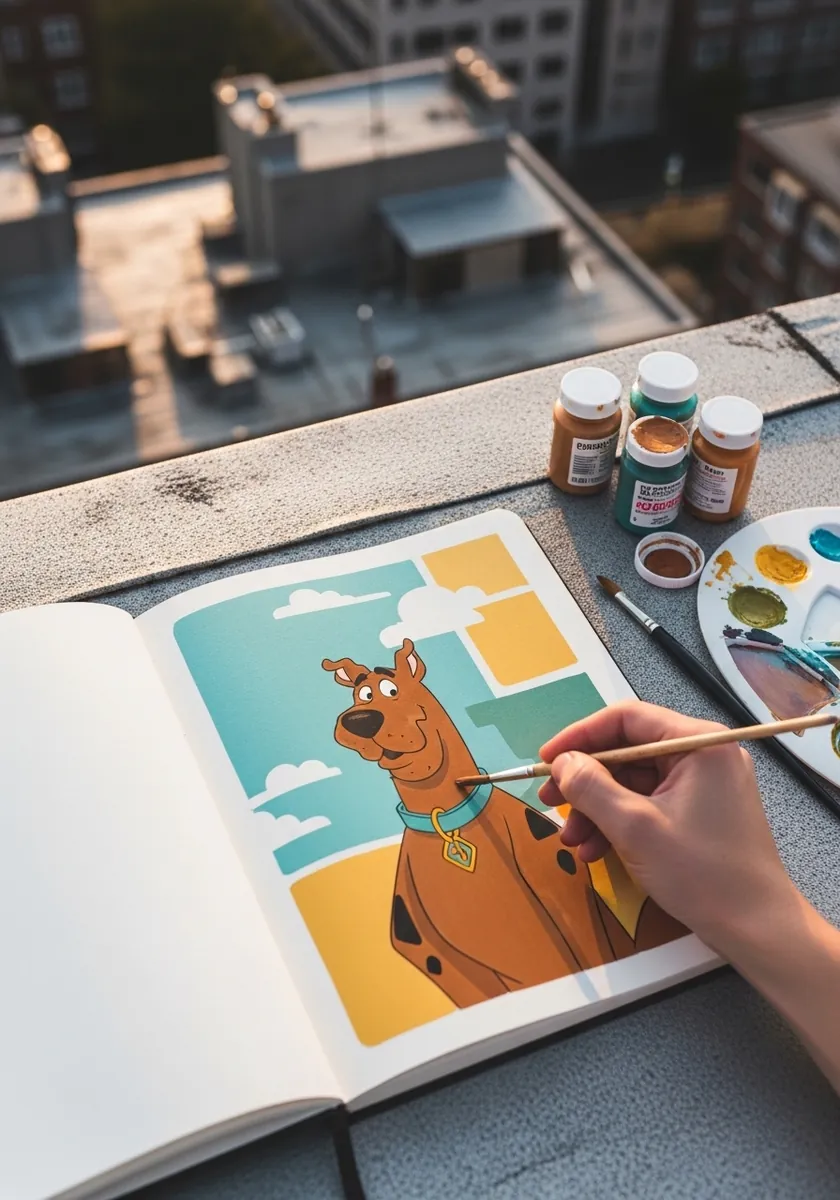
Modernist block backgrounds need a limited palette and hard edges. Use three flat rectangles, overlap two of them slightly, and let the character break across at least one boundary. No gradients anywhere on the page. Let one block sit behind the figure and one in front of a paw, which builds depth without shading.
25. Gouache Half Body Portrait
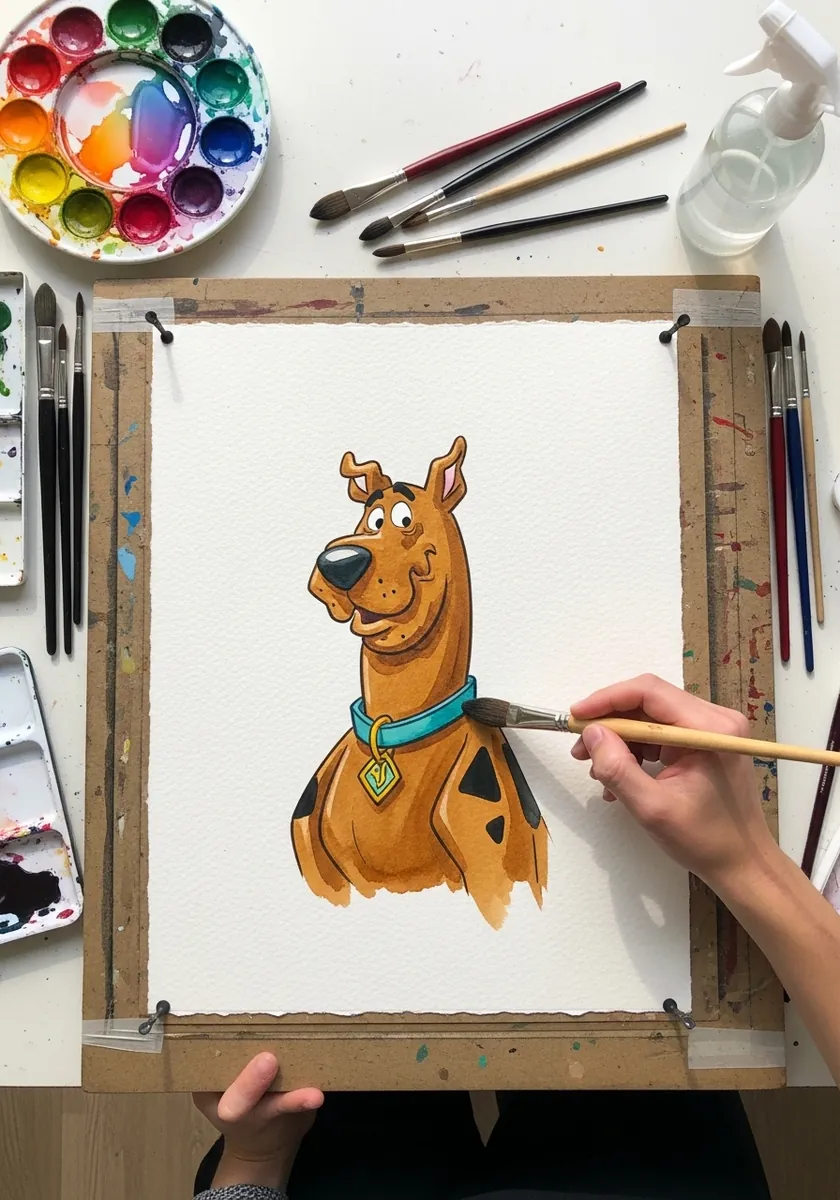
Gouache dries flat and slightly lighter than it looks wet, so mix a shade darker than you want. Block the tan first, add the diamond markings second, and finish with the collar. Test every mix on scrap before committing. Reactivate dried gouache with a damp brush if you need to soften an edge, which acrylic will not allow.
26. Zentangle Patterned Figure
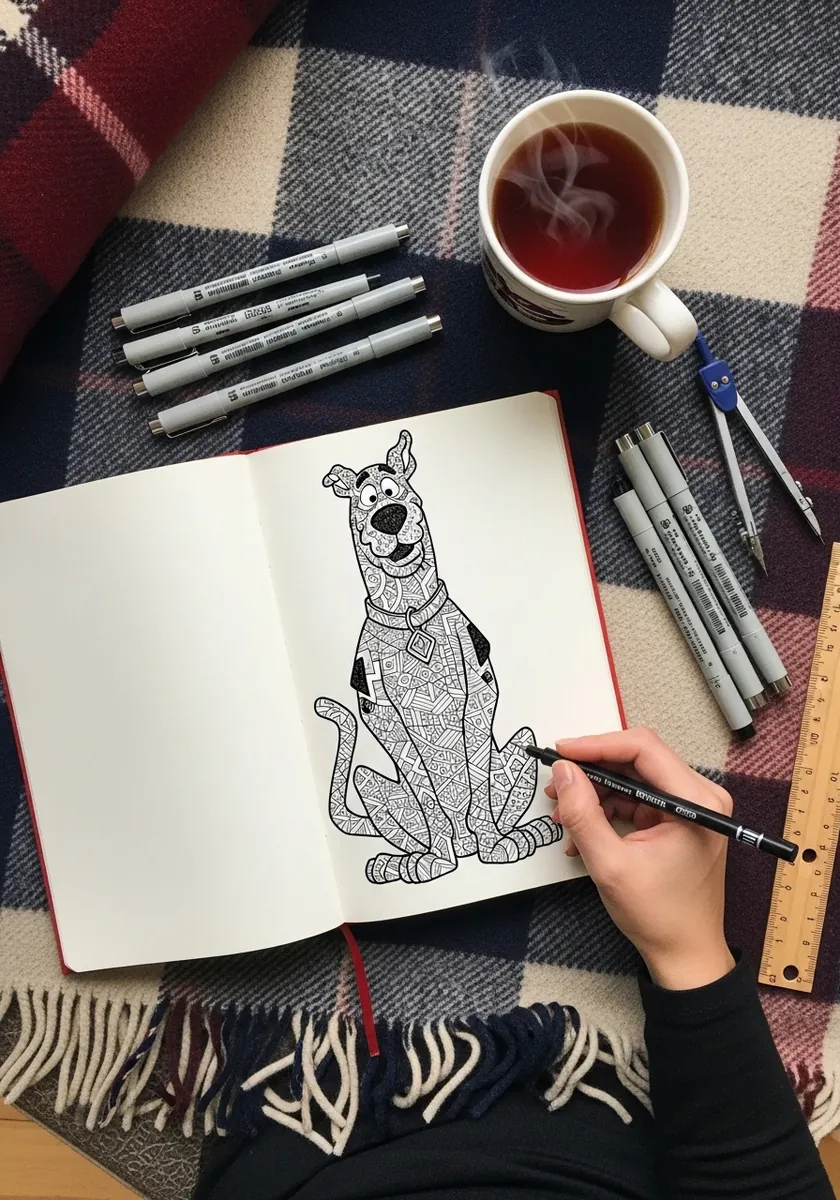
Dense pattern still needs a value structure underneath. Divide the body into zones, give each a different motif density, and pack the linework tightest along the underside. The markings become pattern zones of their own. Keep the collar completely unpatterned, so one clean shape survives among all that linework.
27. Two Character Line Art Spread
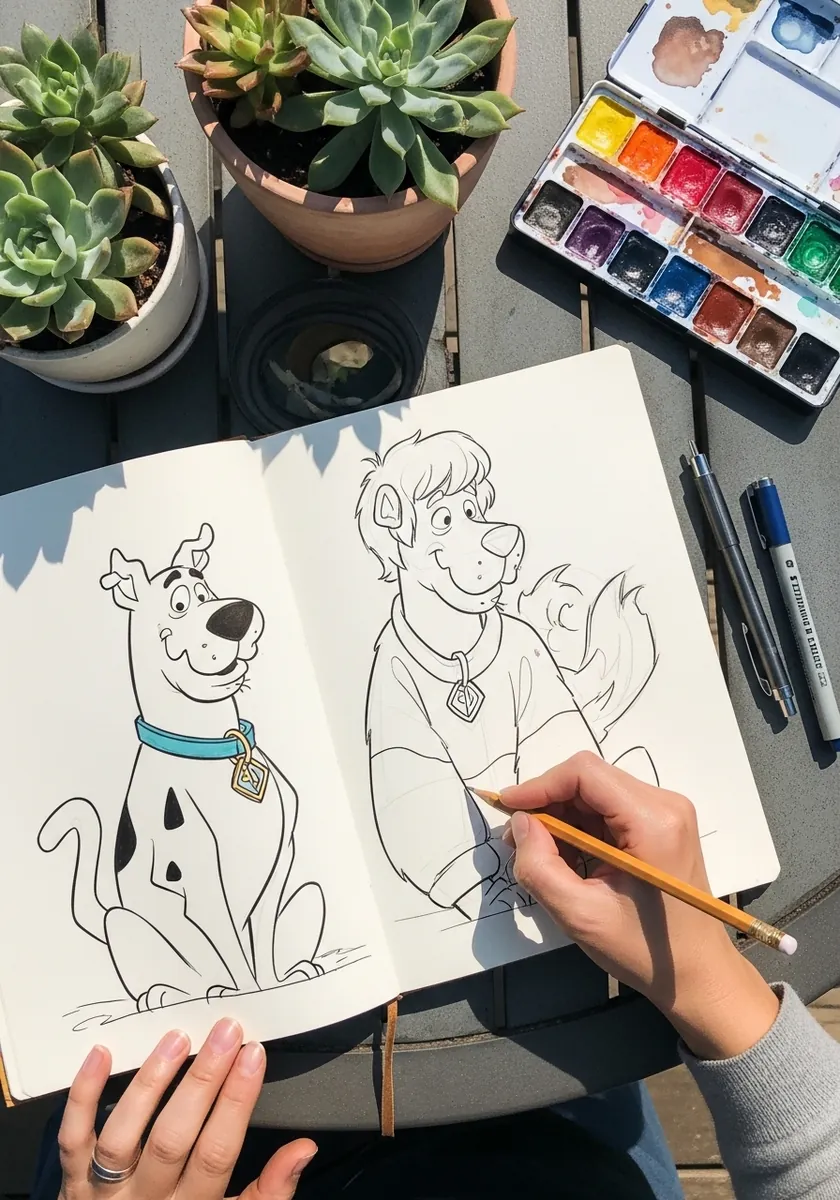
A spread with two figures needs a shared eye level. Set one horizon across both pages, keep both characters standing on it, and match the line weight exactly. Then the gutter reads as space rather than as a divide. Draw both figures at the same sitting, since posture drifts noticeably between sessions.
28. Palette Knife Acrylic Figure
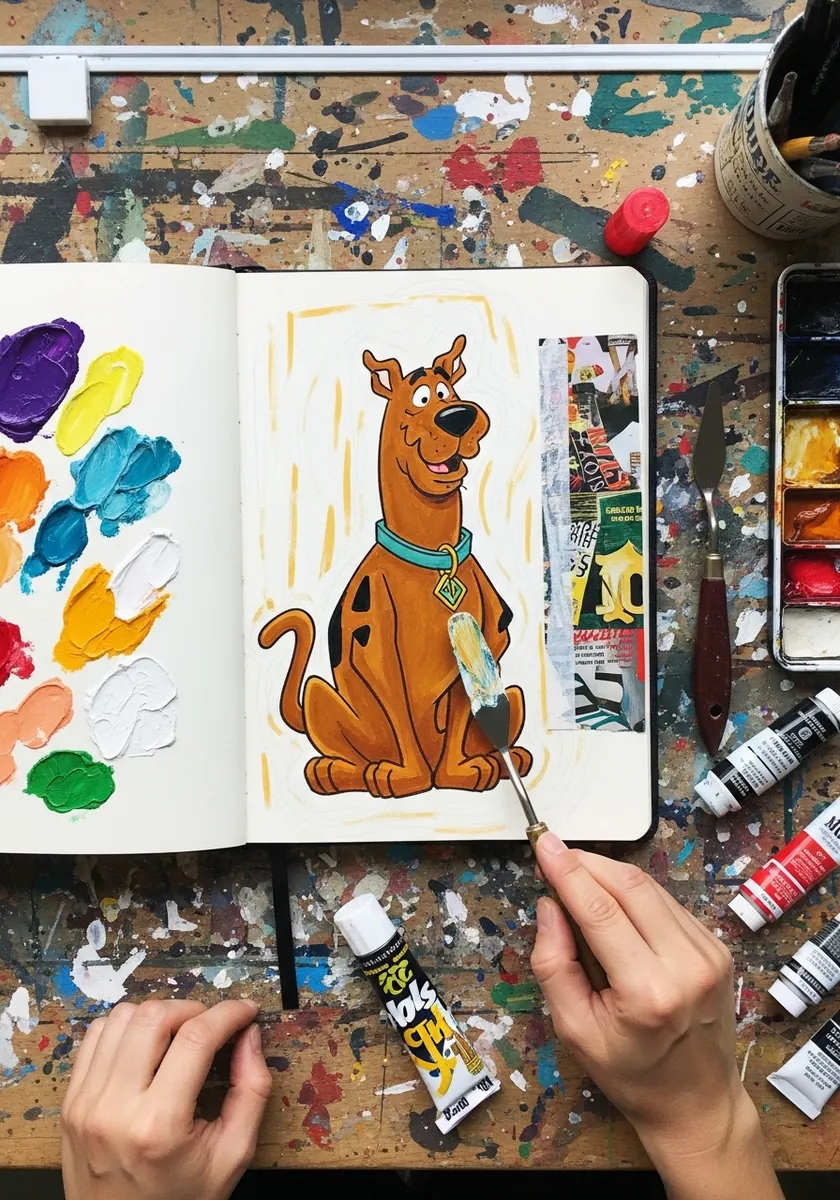
A knife cannot do detail, which forces real simplification. Build the body from four or five decisive slabs, scrape once through them for the markings, and add the eyes with a brush at the very end. Load the knife from the edge rather than the flat, which gives a cleaner slab with a crisp boundary.
29. Blue Pen Sketch by a Window
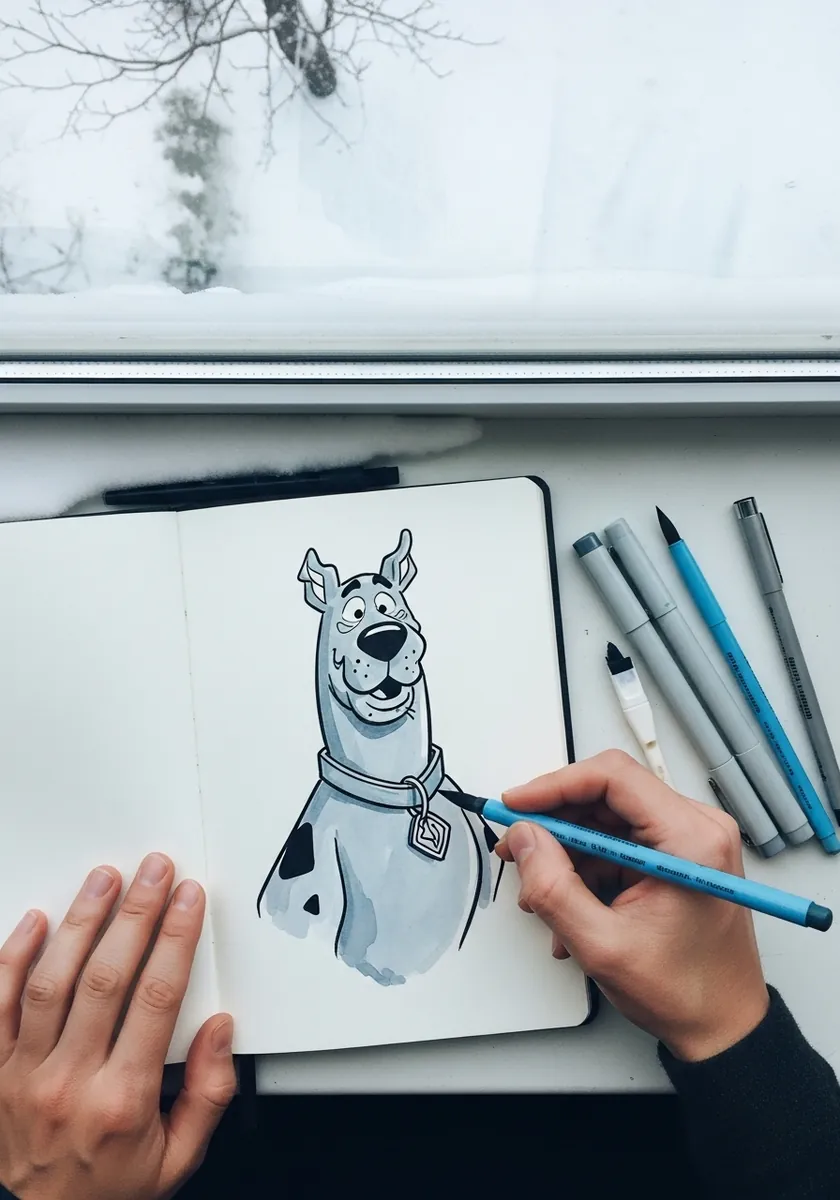
Ballpoint cannot be lightened, so plan the highlights before you start. Work the base tone in one direction, cross it at a shallow angle for the darks, and leave the muzzle top and collar tag as untouched paper. Rest your hand on scrap paper, because ballpoint transfers onto the sheet from skin oil surprisingly easily.
30. Large Graphite Portrait
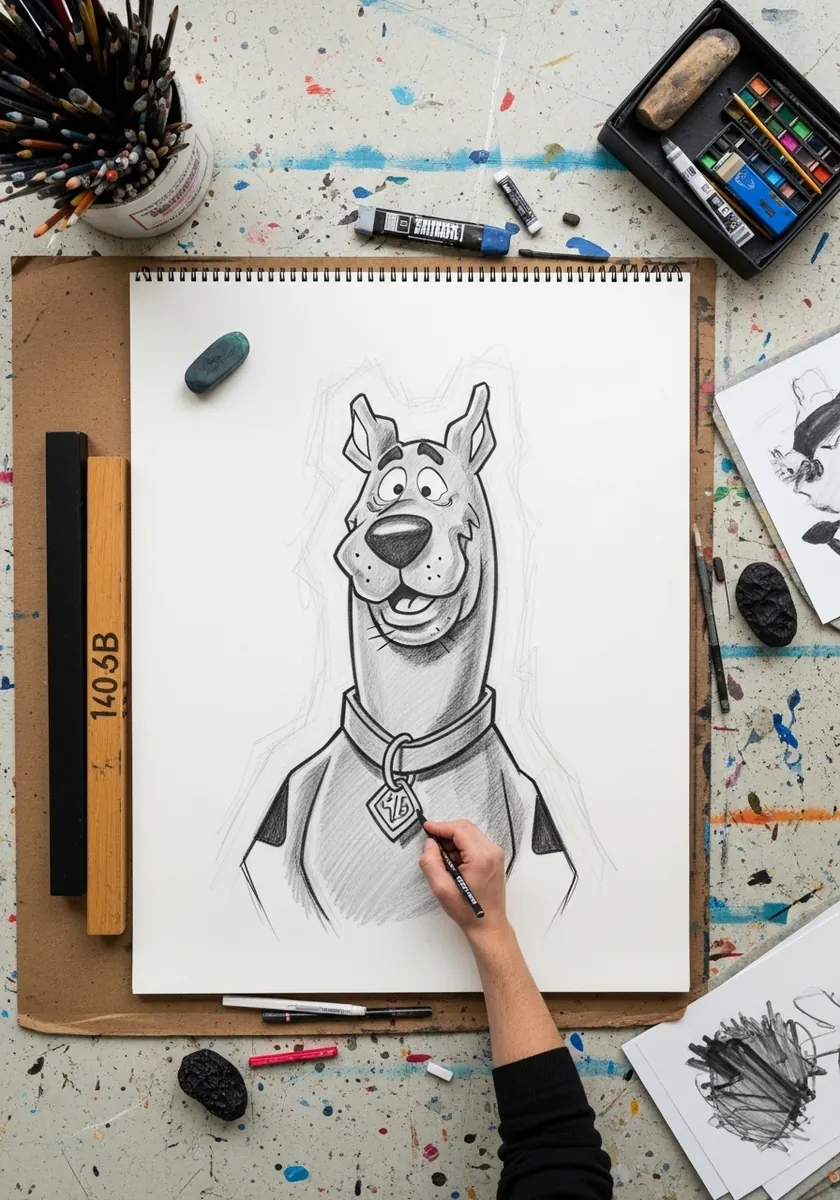
Scaling up changes what a drawing needs. At this size a flat fill looks empty, so add a genuine gradient across the skull and real texture at the nose. Details you could imply small become obvious gaps large. Work standing back from the board regularly, since large drawings distort badly when judged up close.
31. Art Nouveau Gold Framed Panel
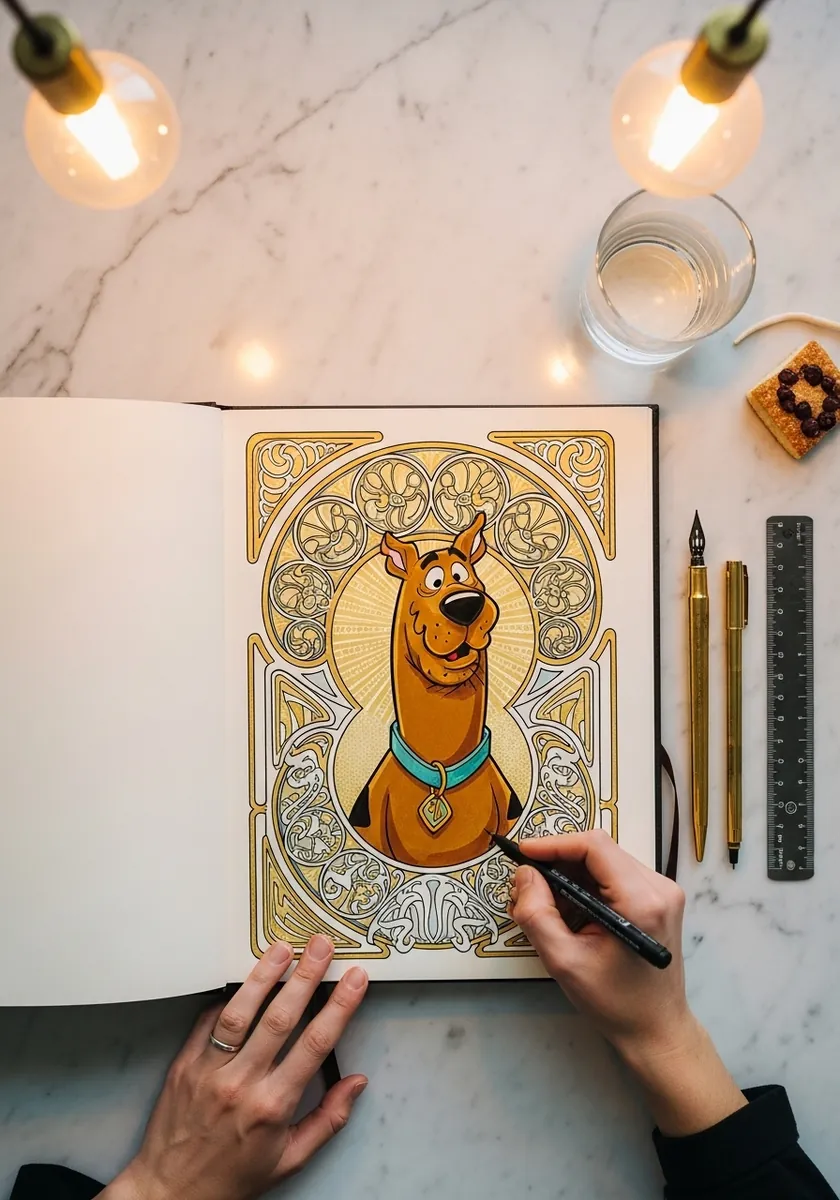
Nouveau panels divide the labor between figure and frame. Keep the character flat and calm, load every bit of detail into the surrounding whiplash curves, and apply the gold last, once everything beneath is fully dry. Rule the frame in pencil first and ink it last, so the border stays perfectly square to the page.
Frequently Asked Questions
How do you draw Scooby Doo correctly?
Start from a Great Dane and then break the rules deliberately. Bow the legs outward, slope the back downward from the shoulders, and pull the chin back so it recedes. Those three intentional faults are exactly what designer Iwao Takamoto built the character from.
Why does the character look like a badly proportioned dog?
Because he was designed that way. Takamoto consulted a Great Dane breeder, learned what judges look for in the breed, and then reversed each desirable trait. The result reads as comic and appealing rather than as an accurate animal.
What shape are the spots on his back?
Irregular diamonds rather than circles. Vary their size and angle, cluster them along the spine and haunch, and let one or two break the silhouette edge. Perfectly round evenly spaced spots make the marking look printed on.
How do you draw the head?
Keep the muzzle long and rounded with the nose set well forward of the eyes, and place the eyes close together and high on the skull. Both ears hang as soft folded flaps. The chin should stay small and tucked under the muzzle.
Can I sell Scooby Doo drawings?
No. He is a copyrighted and trademarked character, so fan drawings are fine for practice and personal use but cannot be sold or used commercially. Study the construction, then apply the same deliberate-distortion idea to a character of your own.
References and Further Reading